.png)

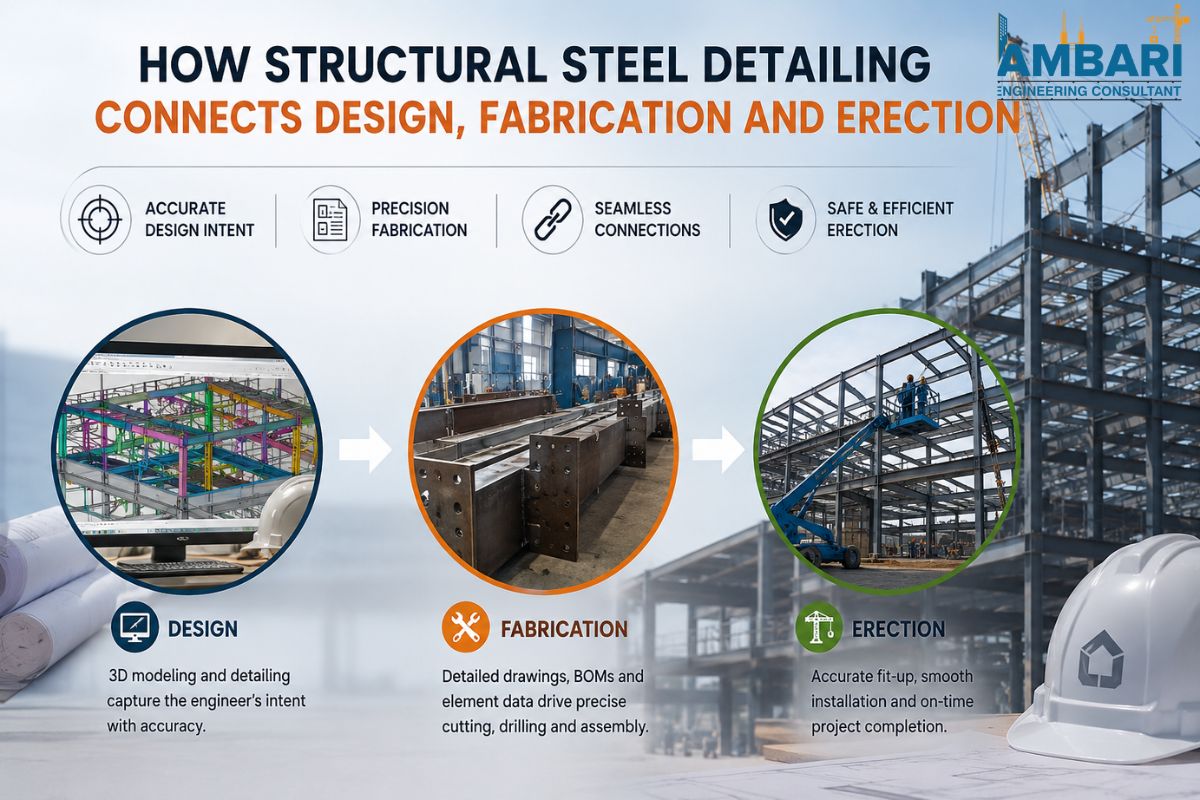
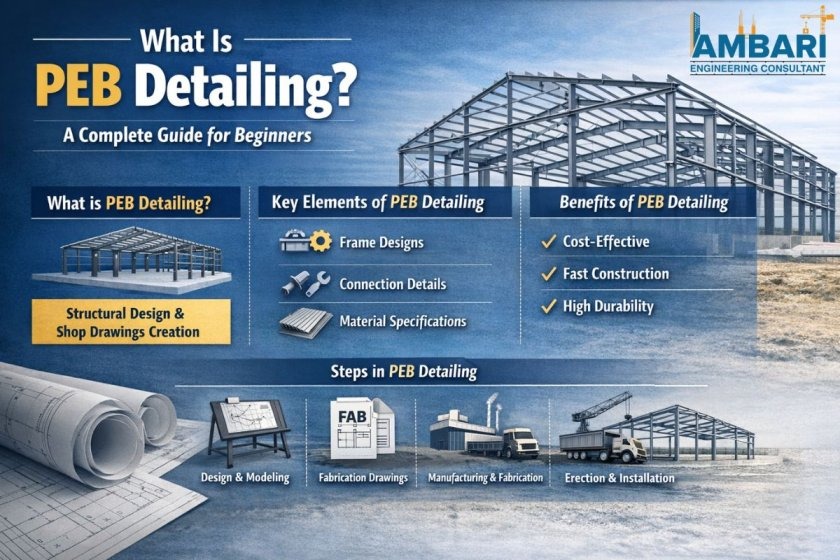
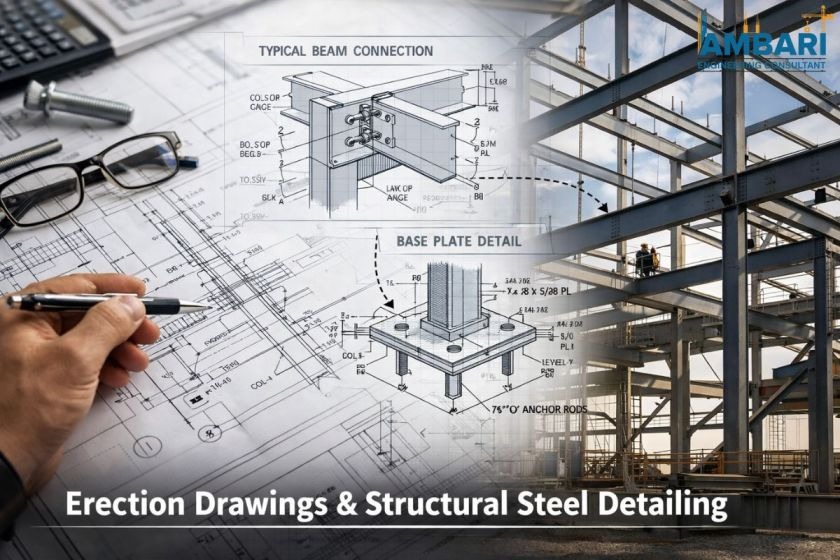
Structural steel detailing provides the technical link between the design specified by an engineer and the construction of a steel frame. The steel detailing process converts the engineering drawings into shop drawings and erection drawings. Structural steel detailing is an important step in construction because missing it results in failure to implement the engineer’s ideas.
The worldwide market for structural steel is expected to grow from $123 billion in 2025 to about $202 billion in 2033. In North America, the market is estimated to reach $179 billion and grow by nearly 9% annually. It is this growth that makes contractors turn to structural steel detailing services.
Key takeaways
- Through detailing, engineering drawings can be accurately translated into field and shop specifications.
- Fabrication and erection drawings serve as an effective tool for teams, helping them to avoid costly construction errors.
- In connection detailing, excessive review is necessary since it can lead to project reworking.
- With knowledge of the AISC, tolerances, and BIM technologies, detailers can reduce costs in any project.
What does structural steel detailing actually do?
An engineer's structural drawings tell you what the building needs to do: load paths, member sizes, code compliance. They don't tell a welder which side of a beam gets a stiffener plate, or tell an ironworker which bolt goes in which hole first. Detailing fills that gap.
A detailer reviews the structural set, the architectural drawings, and usually the specifications, then produces two distinct sets of documents:
- Shop drawings - for the fabrication shop: cutting dimensions, weld symbols, bolt hole locations, piece marks.
- Erection drawings - for the field crew: where each piece goes, in what order, and how it connects to what's already up.
Both documents have to agree with each other and with the original structural design. When they don't, you end up with steel that's technically correct on paper but doesn't actually fit together on site.
How do fabrication drawings turn designs into shop instructions?
Fabrication shops don't work from structural engineering drawings directly. They work from detailed shop drawings that spell out every cut, hole, and weld. That's why steel fabrication drawings services in USA exist as their own discipline, separate from general structural engineering.
A shop drawing package typically includes piece marks for every individual member, material grades, weld specifications, and bolt patterns down to the hole diameter. A fabricator working from an incomplete or ambiguous shop drawing has two options: stop and issue an RFI, which costs time, or make an assumption, which sometimes costs a lot more once the piece reaches the field and doesn't fit.
However, one thing people underestimate: fabrication drawings also have to account for shop capacity. A beam that's technically correct on paper but exceeds a shop's crane capacity or shipping envelope creates a problem that has nothing to do with the design itself. Experienced detailers catch these constraints before drawings go into production, not after.
Steel erection drawings and why field sequencing depends on them
Fabrication accuracy doesn't matter much if the crew can't figure out the assembly order once the steel arrives. That's the job of steel erection drawings services in USA: plans that show erectors exactly which piece goes where, in what sequence, and how each connection gets made from the ground up.
Erection drawings usually include a piece-mark index matched to the shop drawings, framing plans by level or grid line, and connection details specific to field bolting or welding. On a multi-story building, sequencing matters more than most people realize. Columns have to go up before the beams that frame into them, and certain bracing has to be in place before the structure is stable enough to support the next lift.
Therefore, a real example: on a warehouse expansion, an erection drawing that didn't clearly flag a temporary bracing requirement left a partially erected frame sitting unsupported overnight, until the crew caught it the next morning. Nothing failed. It easily could have. That's the kind of risk erection drawings exist to prevent.
Connection detailing: The most technical layer of the process
If there's one part of steel detailing that separates an experienced team from an inexperienced one, it's connections. Steel Connection Detailing Services in the USA cover how beams meet columns, how braces tie into frames, and how loads actually transfer from one member to the next, not just how things look on the drawing.
Moreover, engineers typically specify connection loads and sometimes connection types, but the detailer works out the actual geometry: bolt count, plate thickness, weld length, and clearances, so the connection physically fits without interfering with adjacent members, deck, or MEP runs. Get a connection wrong, and it's rarely a minor fix. It often means re-fabricating a piece or field-welding a correction, and both are expensive and slow.
This is also where building codes and AISC (American Institute of Steel Construction) standards matter most. Connection capacity has to match the engineer's design loads. A detailer who treats connection design as a formality rather than an engineering check is asking for problems down the line.
The detailing workflow: step by step
Here's roughly how a detailing project moves from contract documents to steel on site:
| Stage | What happens | Who's involved |
|---|---|---|
| Document review | Detailer studies structural, architectural, and spec documents | Detailer, EOR |
| Preliminary layout | Framing plans and piece numbering established | Detailer |
| Connection design | Connection geometry worked out to match specified loads | Detailer, sometimes EOR sign-off |
| Shop drawing production | Detailed cut, weld, and bolt drawings issued | Detailer, fabricator |
| Erection drawing production | Sequenced field assembly drawings issued | Detailer, erector |
| Review and approval | EOR and GC review drawings, RFIs resolved | EOR, GC, fabricator |
| Fabrication | Shop cuts and assembles pieces per approved drawings | Fabricator |
| Erection | Field crew assembles steel per approved erection drawings | Erector |
Most delays happen at the review and approval stage. Not because detailing itself is slow, but because unclear drawings generate multiple rounds of RFIs before everyone agrees the design is buildable.
Common mistakes that slow down steel projects
A few patterns show up again and again on projects that run into trouble:
- Skipping coordination with MEP and architectural trades. A beam that's structurally perfect but clashes with ductwork still has to be re-detailed.
- Underestimating connection complexity, or treating connections as an afterthought instead of engineering them properly.
- Poor piece-mark discipline. Inconsistent numbering between shop and erection drawings confuses the field crew.
- Ignoring shop and shipping constraints, designing pieces the fabricator's equipment can't handle or that can't legally ship.
- Rushing approval cycles and pushing drawings through without proper EOR review, which just moves the problem downstream to the field.
None of these are exotic. They're the same handful of issues that show up on almost every project where detailing gets treated as a low-priority task instead of the technical discipline it actually is.
What to look for when hiring a detailing partner?
Not every detailing shop is set up for every project type. Before committing to structural steel detailing services USA, check a few things directly:
- Do they have experience with your specific project type: industrial, commercial, institutional?
- Are they familiar with the codes and jurisdictions relevant to your project location?
- Can they show past connection design work, not just shop drawing samples?
- How do they handle RFIs and revision turnaround during fabrication?
- Do they coordinate directly with the fabricator and erector, or only with the GC?
Moreover, a detailer who asks good questions early, about shop capacity, site access, connection preferences, usually produces cleaner drawings than one who just wants the structural set and a deadline.
Expert insights
Detailers who've been at this long enough tend to agree on one thing: the projects that go smoothly are the ones where detailing starts early, before fabrication is already scheduled. Rushed detailing timelines are the single biggest predictor of how many RFIs show up later.
Steel fabrication drawings services and steel erection drawings services in the USA work best when the same team produces both, or at least follows the same coordinated process. When shop drawings and erection drawings get handled separately with no cross-check, discrepancies between the two sets are almost guaranteed, and they tend to surface at the worst possible time, once steel is already on site.
On the connection side, Steel Connection Detailing Services in USA move through review faster when the engineer of record gets looped in early, rather than receiving finished connection designs cold for approval. Fewer surprises mean fewer rounds of back-and-forth.
Bottom line
Structural steel Detailing is the link between design and construction. The fabrication drawings assist shops to accurately manufacture each steel component. Erection drawings are used to give instructions to crews for safe and proper assembly. Connection detailing also guarantees structure functionality on site.
In steel works, Ambari Consultant considers detailing as a single process. The team collaborates with the following disciplines during the project, including: engineers, fabricators, and erectors. This ensures that all stages are in line with each other, from the initial drawing to the final installation.
Frequently asked questions
- What's the difference between structural drawings and steel detailing drawings?
Structural drawings are used to indicate design intent and load requirements. Detailing drawings convey that to the cutting, welding, and assembly instructions which a fabricator or erector can follow. - Who typically orders steel detailing services, the GC, the fabricator, or the engineer?
Typically, the detailer is hired by the fabricator. On larger projects, the general contractor may manage the detailing directly to ensure that the fabrication and erection schedules are aligned. - How long does a typical detailing package take to produce?
It is determined by both the complexity of the project and the number of connections being added, but the erection and shop drawings for a medium-sized commercial building can take several weeks, including review cycles. - Why do connection details cause more RFIs than any other part of the drawings?
There are engineering judgements that must be made beyond what is indicated on the structural drawings. Clearances, geometry, and load transfer must be determined exactly. - Can errors in erection drawings actually cause safety issues on site?
Yes. The wrong sequence of operations or the lack of temporary bracing details can create an unstable structure, not only for scheduling purposes, but for safety purposes as well. - Do steel detailers need to be licensed engineers?
Not always. However, for most projects, connection design will depend on review and approval by a licensed engineer of record. - What standards do detailers follow in the USA?
Detailers typically use AISC drawing standards and project-specific codes, with shop and erection drawings being coordinated with architectural and MEP drawings in 3D. - How does BIM coordination affect steel detailing accuracy?
The verification of the steel model with architectural and MEP models detects clashes early in fabrication to avoid costly rework after cutting. - What happens if fabrication drawings and erection drawings don't match?
Typical mismatches occur on site as components do not fit into the sequence of assembly as outlined in the drawings, and corrections will have to occur in the field, which will be more time-consuming and expensive than if the corrections were made in advance. - Is it worth hiring a specialized detailing firm instead of handling it in-house?
Yes, for most fabricators and contractors. Specialized detailers have expertise in making connections and experience in coordinating cross-trade, which is difficult to maintain in-house unless detailing is part of the core business.
.jpeg)