.png)

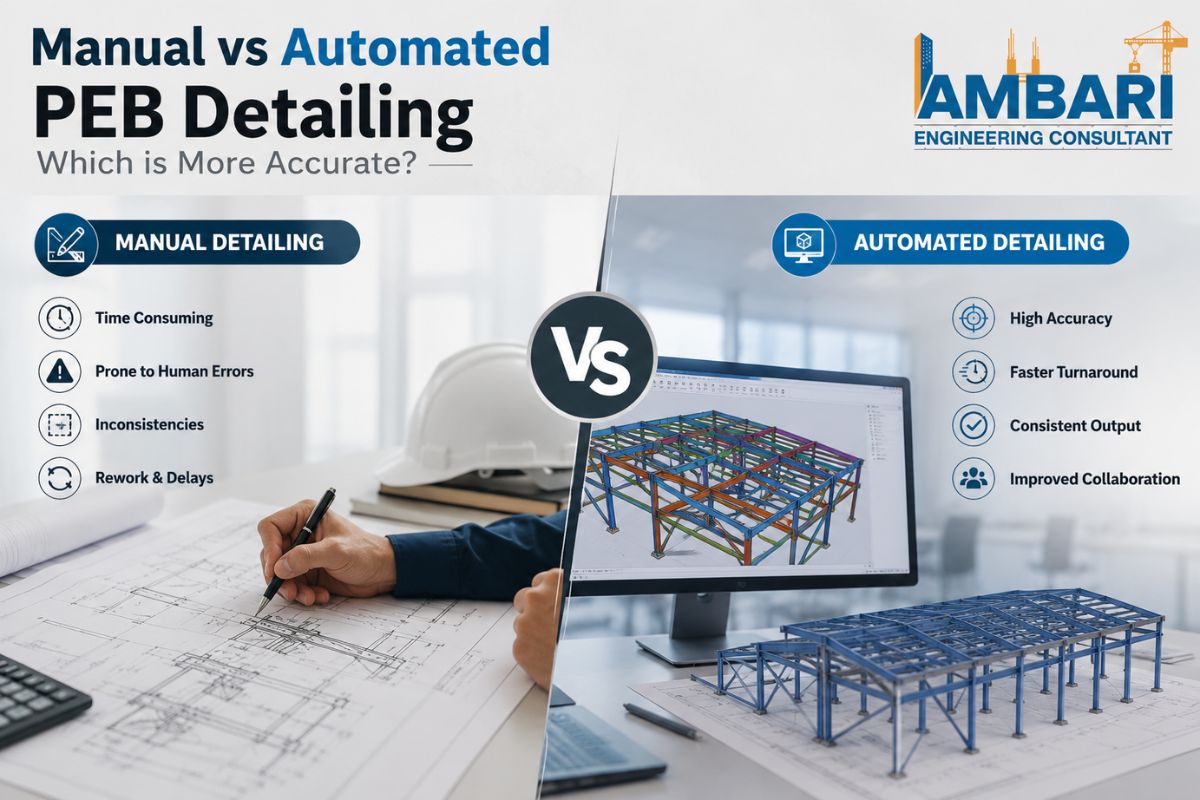
Manual PEB detailing relies on the experience and attention to detail of the engineer, while automated detailing involves BIM, 3D modeling, and specialized software for greater precision and consistency. Automated detailing provides greater accuracy, speed of revisions, and fewer coordination errors in most industrial and commercial projects. However, human knowledge is still needed to check out intricate details and validate ultimate results.
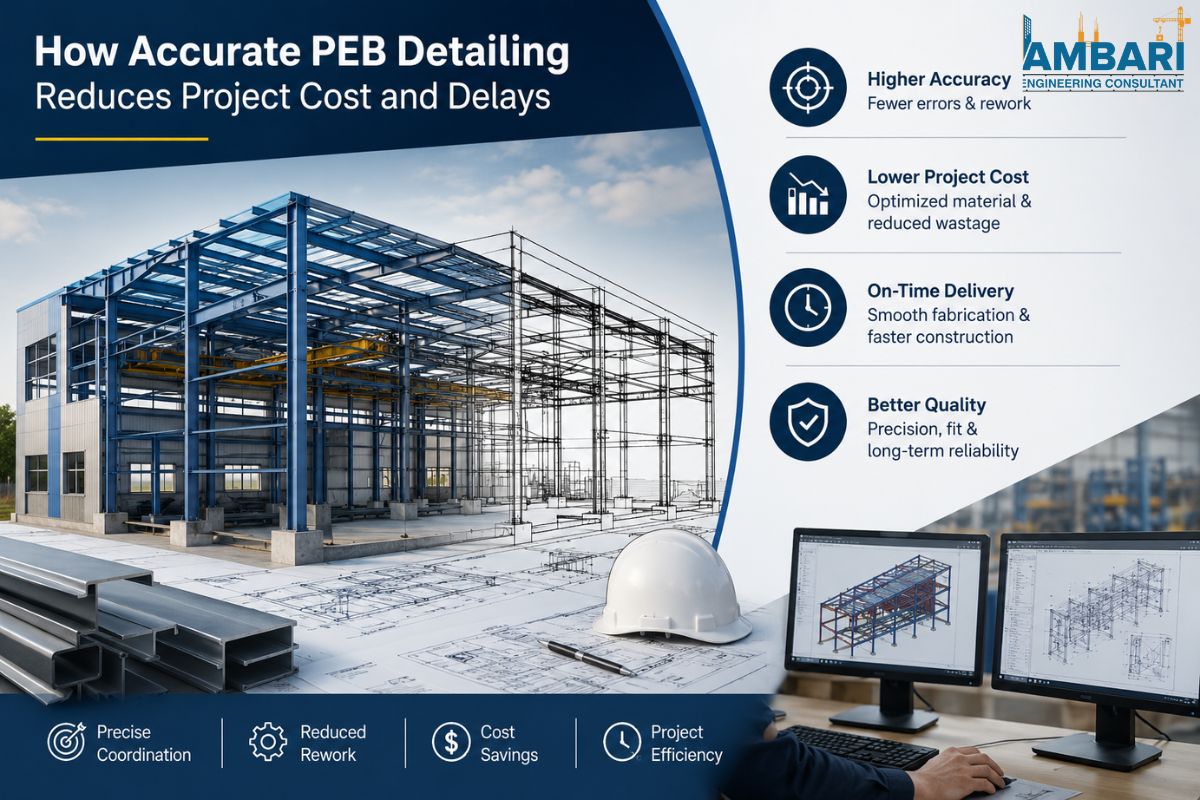
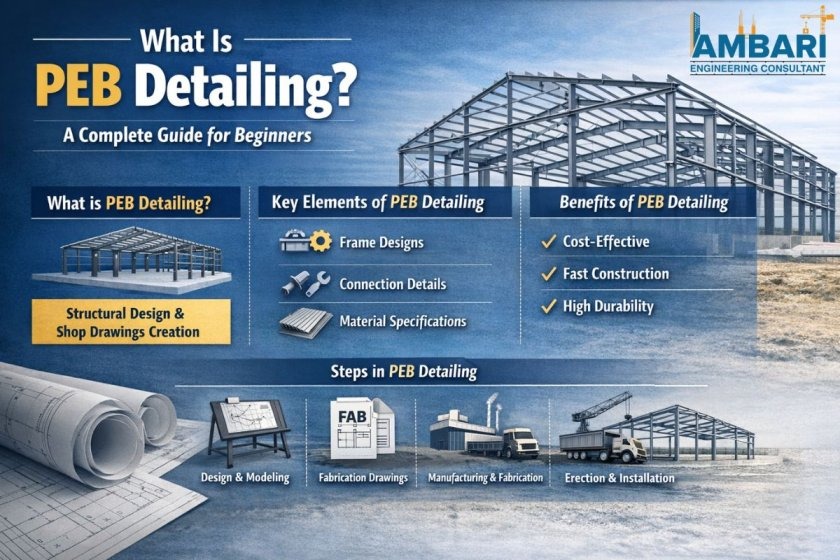
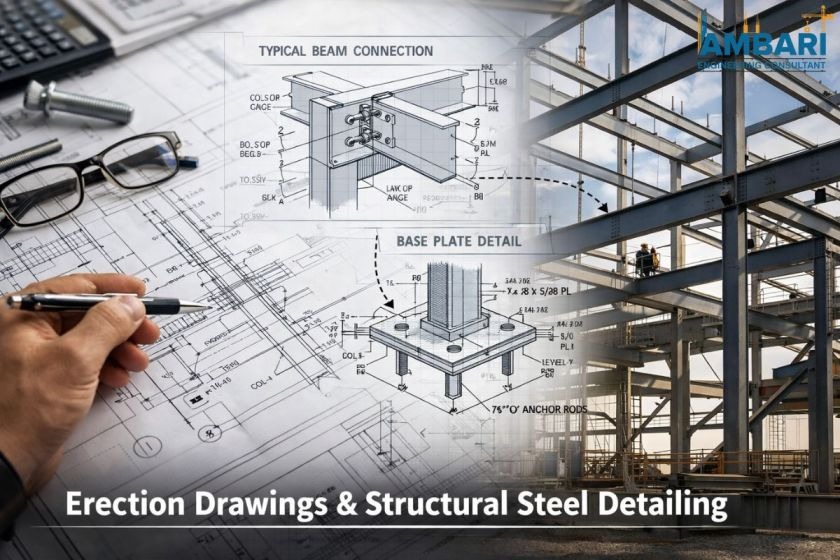
PEB detailing services include the production of exact and accurate fabrication drawings, connection drawings, shop drawings, GA drawings, anchor bolt layouts, and material information needed in the manufacture and erection of a pre-engineered building.
Detailing ensures that all the steel members are positioned correctly during fabrication and on-site installation, which saves time and money in the event of costly delays and rework.
| Feature | Manual Detailing | Automated Detailing |
|---|---|---|
| Accuracy | Depends on engineer | Highly consistent |
| Speed | Slower | Much faster |
| Design Revisions | Time-consuming | Quick updates |
| Clash Detection | Manual checking | Automatic detection |
| Human Error | Higher possibility | Significantly reduced |
| Large Projects | Difficult to manage | Highly efficient |
| Cost Over Time | Higher due to revisions | More economical |
Furthermore, today's detailing software has revolutionized steel project delivery by enhancing coordination, eliminating repetitive tasks, and minimizing drawing inconsistencies.
Manual detailing is mainly carried out by experienced structural detailers who interpret engineering designs and prepare the required fabrication documents.
The process includes:
This method is highly dependent on the skills and experience of the individual detailer. As projects become larger and more complex, the likelihood of repetitive manual work also increases. In pre engineered building design India projects, this can result in missed dimensions, drawing inconsistencies, or coordination errors, particularly as project size and complexity grow.
Automated detailing integrates BIM, 3D modeling, intelligent steel detailing software, and automatic drawing generation to streamline the detailing process.
Rather than manually redrawing every change, the software automatically updates all related views whenever the model is modified.
Benefits include:
Additionally, these capabilities are especially valuable for large industrial complexes and projects with tight construction schedules, where accuracy, coordination, and speed are essential.
Most modern PEB projects benefit from automated detailing because repetitive drafting tasks are reduced and drawings remain synchronized with the digital model. As a result, automated workflows generally deliver greater accuracy and consistency.
However, software alone is not enough. The best results are achieved when automation is combined with professional engineering review and quality control.
For large industrial facilities, warehouses, logistics parks, and manufacturing plants, automated workflows typically provide greater overall accuracy, while experienced engineers verify the final outputs before fabrication begins.
Pros
Cons
Pros
Cons
Manual detailing can be useful for:
When projects involve engineering judgment beyond the capabilities of software, human expertise remains critical.
Automation delivers the greatest value for:
As collaboration between architects, structural engineers, fabricators, and erection teams becomes increasingly important, organizations are adopting digital workflows for their pre-engineered building design India projects.
Similarly, companies offering steel detailing services in India are embracing BIM-driven workflows that improve accuracy, reduce project schedules, and enhance fabrication efficiency.
Avoiding these common mistakes can help minimize delays, rework, and unexpected project costs.
Automated workflows supported by experienced engineers provide the ideal balance of speed and accuracy, particularly for projects involving multiple stakeholders, tight schedules, or large steel quantities.
When evaluating PEB Design and Detailing Services, consider more than just software capabilities. Assess the team's experience, quality control procedures, revision management processes, and understanding of fabrication standards.
An engineering partner should combine advanced technology with practical construction expertise. Ambari Consultant delivers professional PEB design and detailing services tailored to modern construction requirements, ensuring accurate detailing, efficient coordination, and smooth project execution.
The debate between manual and automated PEB detailing is not about choosing technology over engineers. Instead, it is about leveraging technology to improve engineering accuracy and project efficiency.
Automation improves consistency, speeds up revisions, and reduces coordination errors, while experienced engineers ensure every drawing is practical, constructible, and aligned with project requirements.
For today's fast-paced construction environment, the most effective approach combines smart automation with expert engineering review.
Yes, in most projects. Although automated detailing eliminates drafting inconsistencies and ensures drawings stay in sync, skilled engineers are still needed to review and validate the final outputs.
Yes. For customised structures, complex engineering judgments, and final quality control, manual detailing skills remain essential.
The greatest benefits are seen in warehousing, manufacturing, logistics, industrial plants, commercial buildings, and infrastructure projects where large volumes of structural steel and extensive design coordination are required.
BIM improves PEB detailing through 3D visualization, clash detection, coordinated design updates, and easier data sharing between architects, engineers, fabricators, and construction teams. It helps identify errors before fabrication begins, reducing costly rework.
Yes. Although automated detailing requires an initial investment in software and skilled professionals, it helps lower overall project costs by reducing rework, minimizing fabrication errors, improving coordination, and accelerating project delivery.