.png)

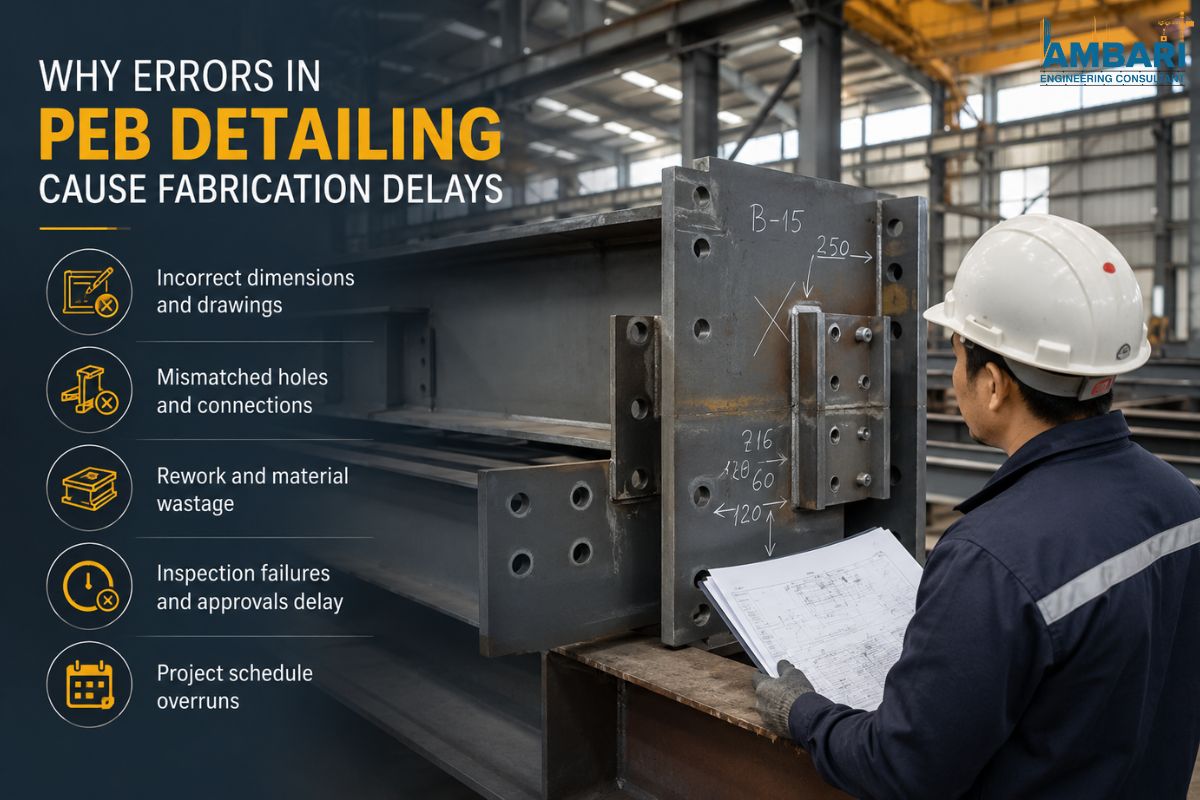
In PEB projects, fabrication delays are primarily due to wrong detailing. Even a small mismatch in dimensions, bolt locations, or material size can stop production for hours or even days. Hence, the significance of accurate detailing in any project becomes one of the most crucial elements.
For many industrial projects, design approval is the sole aspect that receives a good deal of emphasis, whereas drawing coordination is overlooked. That's where the trouble starts. If the fabrication team receives incomplete or unclear drawings, they will have to spend more time checking and correcting the drawings and reworking the components. This has a direct impact on project time and cost.
Companies such as Ambari Consultant know that proper detailing isn't just about creating drawings. It is about making sure all members, plates, and connections fit in place before the start of fabrication. This way, there are few mistakes and production continues without interruption.
Fabrication shops work on precision. These machines cut steel according to approved drawings. But if there are errors in drawings, the whole procedure gets disrupted.
Common problems that cause delays:
Moreover, there's a lot of confusion about revisions for many projects. Occasionally, the drawings that are sent to the fabricators are not the current ones, and engineers are working on new drawings. This leads to duplication and an unnecessary loss of steel.
Using a professional PEB Detailing Services means that the drawings will typically be checked on several occasions prior to release, and thus these issues are avoided in most projects.
| Detailing Error | Fabrication Impact |
|---|---|
| Wrong dimensions | Re-cutting of steel |
| Missing bolt details | Assembly delays |
| Drawing mismatch | Production stoppage |
| Incorrect material size | Extra procurement time |
| Unclear welding notes | Quality inspection failure |
A big issue is that of different drawings from department to department. For example, GA drawings can be different from shop drawings. This leads to confusion for fabrication teams during production.
A second common problem would be when connection points aren't well identified in PEB structure detailing. Even a slight misalignment of the beam or column can cause big problems during installation at the site.
In real project teams, valuable time is often lost due to:
Furthermore, hectic project timetables improve the odds of detailing errors. The faster drawings are released for general use without review, the more inevitable the possibility of fabrication delays becomes.
That is why it is now preferred for companies to use digital coordination and detailed checking in advance of production approval.
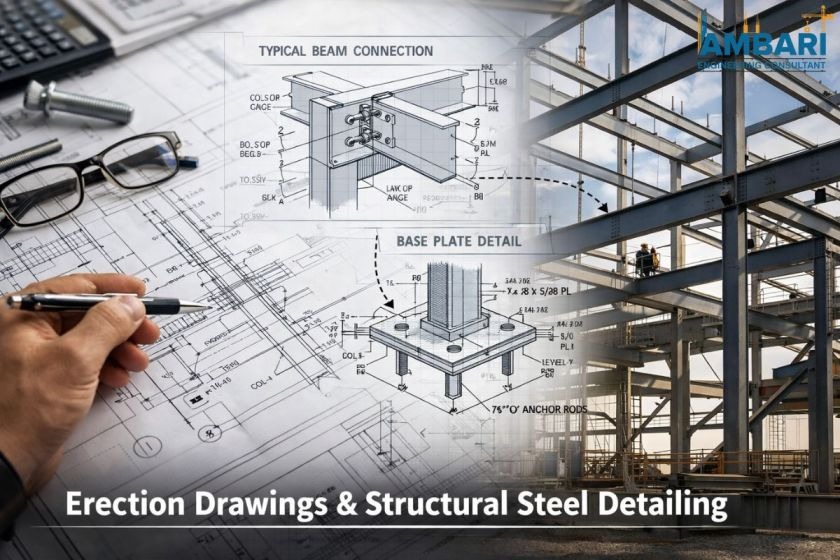
The backbone of any PEB structure is connections. If there is missing connection information, it's not going to be a smooth process for fabrication.
For example, the wrong spacing for the bolts may necessitate replacement of the entire plate. Additionally, if weld sizes are not provided, then quality approval may be denied in the inspection process. These small flaws in the detail build up large time delays in the operation later on.
Structural steel detailing services in India usually pay a great deal of attention to the accuracy of the connections, as fabrication shops rely entirely on these details.
Good connection detailing should include:
Moreover, correct detailing will increase the installation speed at the construction site. Fabricated parts fit properly, cranes operate quicker, and erection crews experience fewer adjustments. This is a time- and labor-saving measure.
Yes. One of the major causes of delays in current PEB fabrication projects is poor coordination.
Architects, structural engineers, and fabrication teams often work separately in many cases. So, until fabrication begins, drawing conflicts often go unnoticed.
In cases of pre-engineered building fabrication in India, projects are usually carried out by various vendors; hence, coordination becomes even more essential. If a drawing is altered without other departments being notified, the fabrication shop could manufacture the wrong parts.
Several coordination solutions involve:
However, companies with a long history in the field, such as Ambari Consultant, minimize project risks by conducting systematic checking of drawings.
That increases production efficiency and decreases costly rework.
The easiest way to resolve errors is to detect them early. Post-fabrication corrections of fabricated steel errors are more expensive than pre-fabrication corrections.
Teams working on PEB design and detailing services in India now use advanced modeling software to identify clashes and inconsistencies before production begins.
These are some suggestions to help minimize delays:
Rushing through project approvals without proper review typically leads to larger delays later on.
Additionally, having professional detailing experts at the start of the project ensures fabrication accuracy from the beginning.
Production delays for PEB products typically start with unnecessary detailing errors. Inaccurate dimensions, ambiguous connections, and lack of coordination can negatively impact the production process and result in cost overruns and delivery delays. So, accuracy should be emphasized before manufacturing begins.
Therefore, good planning and effective planning systems, combined with knowledgeable detailing support, can help projects succeed. These risks can be minimized by accurate engineering workflows and efficient PEB design and detailing services in India that facilitate smooth fabrication and delivery of projects.
Primarily due to incorrect drawings, lack of proper dimensioning, and poor coordination between engineering and manufacturing teams.
Wrong detailing increases rework, material wastage, labor hours, and project completion time.
They ensure fabricated steel members fit properly during assembly and on-site installation without modification.