.png)

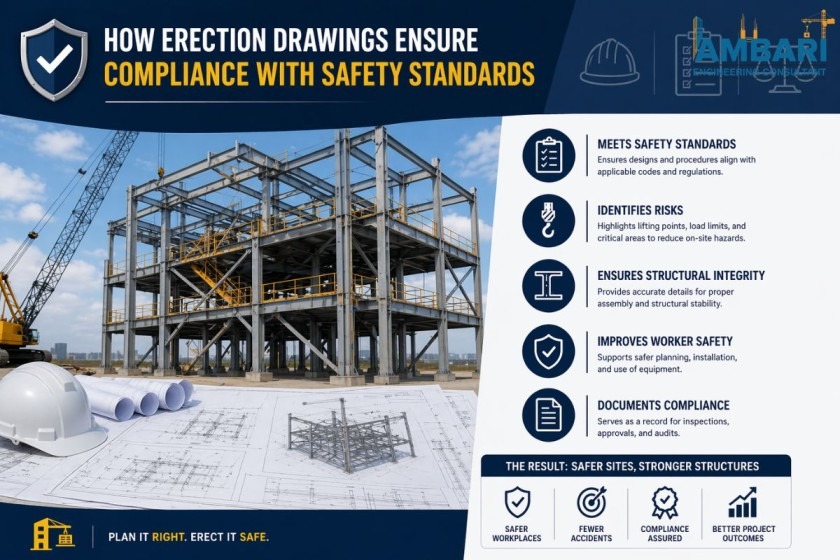
Erection drawings are also safe as they indicate how each structural part is to be put in place. They assist workers in a step-by-step manner, minimize confusion, and assist in meeting safety standards. Member positions, connections, and sequence are evident in these drawings. They are simple to track, and companies such as Ambari Consultant transform intricate designs into straightforward visuals, which are crucial safety aids during construction.
Erection drawings directly support safety standards by ensuring that construction is carried out according to approved methods and proper sequences. They reduce the risk of incorrect installation that could lead to serious accidents.
When drawings are prepared accurately, they align with codes followed in structural engineering services in India. This ensures that all activities comply with required safety protocols.
The following are some ways they help:
However, safety is not just about rules—it is about understanding and applying them correctly. Erection drawings make this process easier and more practical on site.
They also help supervisors monitor work progress. If any activity does not match the drawing, it can be corrected immediately before it becomes a safety risk.
Erection drawings include specific details that directly reduce risks at construction sites. These details are carefully prepared through structural steel detailing services to ensure maximum accuracy.
Key safety information includes:
All these elements help prevent structural failures. For example, incorrect bolt placement can weaken connections, and missing bracing can lead to instability during erection.
These drawings also help workers understand how different components interact, which reduces confusion—especially in complex structures.
An Ambari Consultant ensures that such details are presented clearly without overcrowding the drawings. Clean and easy-to-understand visuals improve on-site decision-making.
Therefore, detailed information in erection drawings is not just technical—it directly protects workers and ensures structural safety.
Erection sequencing is one of the most critical aspects of construction safety. Erection drawings clearly define the correct order of installation to ensure that the structure remains stable at every stage.
Even high-quality materials can fail if sequencing is not followed properly. That is why PEB design and detailing services in India place strong emphasis on defining the correct erection order.
Safe sequencing includes:
Proper sequencing also helps teams plan crane operations and lifting activities safely. It reduces sudden load changes, which can be dangerous during construction.
For example, placing beams before installing columns can lead to structural collapse. Erection drawings prevent such mistakes by clearly indicating the correct sequence.
In addition, proper sequencing saves time and reduces rework. When the workflow is smooth and organized, safety is naturally improved on site.
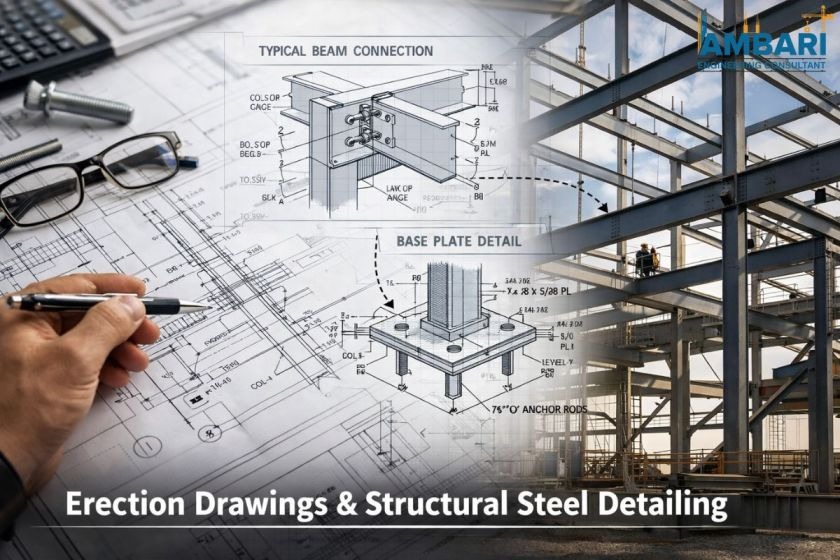
Connections are the most sensitive parts of a steel structure. Their failure can lead to the collapse of the entire structure. This is why erection drawings include detailed connection information.
These specifications are typically prepared using steel connection detailing services in Vadodara to ensure that all joints are strong, accurate, and reliable.
Important connection details include:
Even a small mistake in these details can create serious risks. For example, using fewer bolts than required can weaken the joint significantly.
Erection drawings ensure that all connections are installed exactly as designed. This eliminates on-site guesswork, which is a major cause of safety issues.
Therefore, clear and accurate connection detailing is one of the most effective ways to ensure compliance with safety standards in construction.
Construction projects involve multiple teams, and poor coordination can increase safety risks. Erection drawings help align all teams by providing a single, clear reference for design, fabrication, and installation.
These drawings support coordination through proper fabrication shop drawing services, ensuring consistency across all stages of the project.
Key coordination benefits include:
Coordinated drawings reduce confusion during installation, as workers rely on one clear document instead of multiple references.
Ambari Consultant focuses on maintaining consistency across all drawings, which minimizes errors and improves overall safety.
When all teams follow the same drawings, work becomes faster, smoother, and safer with fewer risks.
Before reaching the construction site, erection drawings go through multiple levels of checking to ensure they meet all safety and design standards.
Key steps include:
Each step reduces the chances of errors, ensuring that drawings are safe and reliable before execution on site.
Approved drawings also act as legal and technical proof that correct procedures have been followed, which is important during audits and inspections.
Regular updates ensure that any design changes are reflected in the drawings, preventing the use of outdated information and reducing safety risks.
Mistakes can occur even when good drawings are available. Being aware of common issues helps improve safety and prevent risks on site.
Common problems include:
However, these errors can be avoided with proper training and supervision. Clear and simple drawings reduce the chances of misinterpretation.
Ambari Consultant focuses on clarity and precision to minimize such risks. Well-structured drawings lead to safer and more efficient execution.
Erection drawings play a vital role in ensuring safety standards in construction. They provide clear instructions, reduce risks, and ensure that every step follows the correct procedures.
From sequencing to connection detailing, each element contributes to safe execution. When combined with professional structural steel detailing services, these drawings become even more reliable.
Choosing experienced experts like Ambari Consultant ensures that safety is never compromised at any stage of the project.
They guide safe installation and reduce risks during structural assembly.
They provide clear instructions, reducing confusion and minimizing errors.
They ensure strong joints and prevent the risk of structural failure.