.png)

Pre-engineered buildings look simple from the outside: a steel frame, some purlins, a metal skin over the top. The engineering underneath is not simple at all. Every bolt, cleat, and baseplate needs to be sized, positioned, and documented before anyone cuts steel.
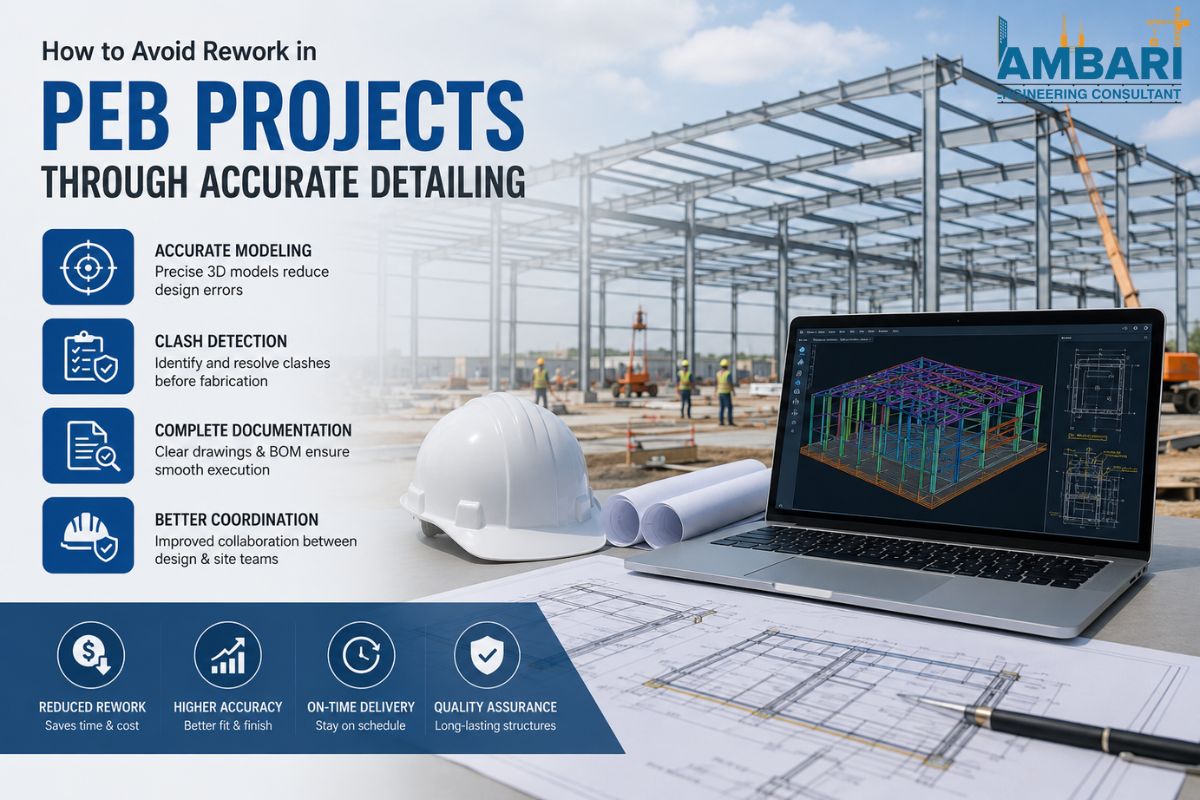
Rushed detailing, or detailing handled by someone who has never stood on a shop floor, doesn't fail on screen. It fails later, when a beam won't line up with a column or a bolt pattern runs into a weld. By then you're paying for the fix in time and material both.
That's the reason more fabricators across Australia now treat detailing as its own line item instead of folding it into general engineering. PEB detailing services in Australia exist for one job: turning a structural design into drawings a workshop can actually build from, without anyone guessing.
Every project starts with the engineer's design package: general arrangement drawings, load calculations, material specs. The detailer's first task isn't drawing anything. It's reading through what's there and, more importantly, noticing what isn't.
However, missing wind load figures, vague bracing locations, grid references that don't quite match up. Catch these early and they're a five-minute fix. Miss them and they resurface in every drawing that follows, usually at the worst possible time.
A few things get checked at this stage, and none of them are glamorous:
This is also where steel fabrication drawings services in Australia earn their fee. AS 4100 for steel structures and AS/NZS 1170 for loading aren't background reading. They determine how connections get sized from the first model onward.
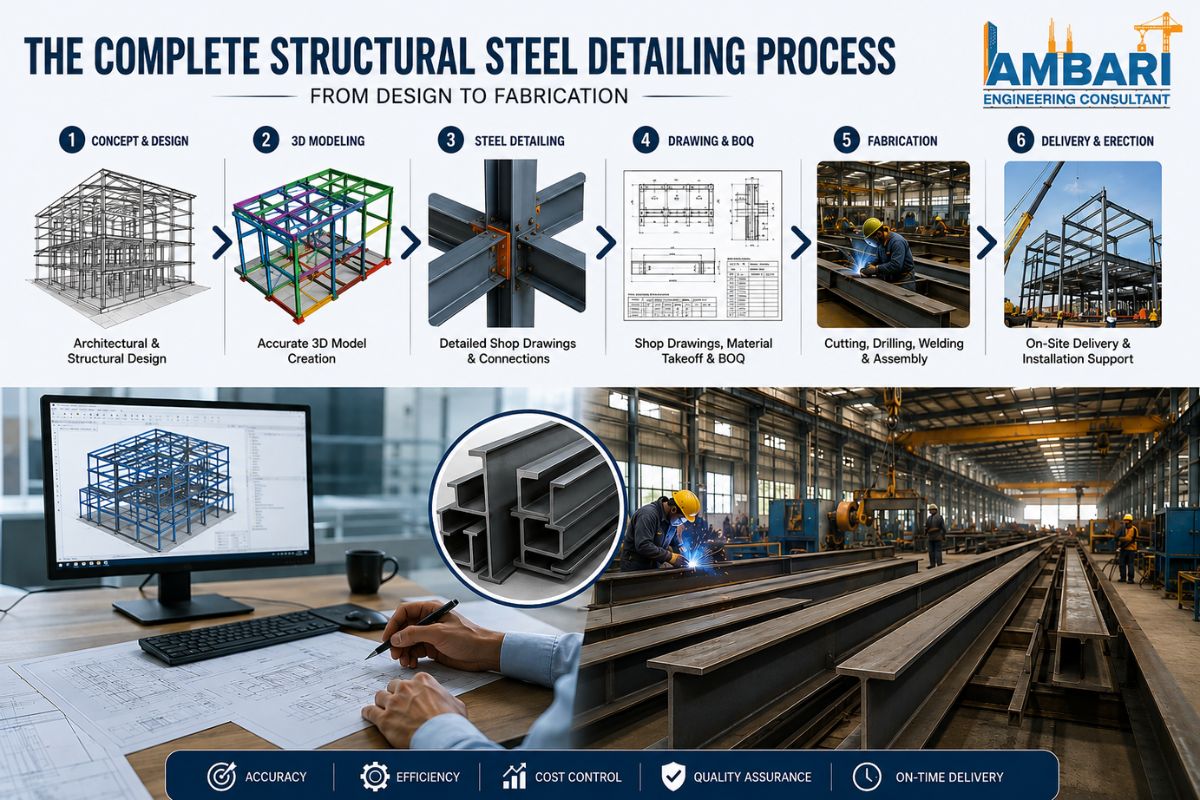
Once the inputs check out, detailing moves into 3D modelling. The building starts taking shape member by member, digitally, before anything physical happens.
Connection design happens here, and it's the hardest part of the job. A moment connection at a knee joint doesn't behave anything like a shear connection at a purlin. Get the bolt count, plate thickness, or weld size wrong and it's not just a code check that fails. It's the connection itself, under actual load.
Therefore, good detailers design connections around what the fabricator can actually build. A shop's press brake or welding setup doesn't always match what an engineer sketched out in theory. Catching that gap before drawings go out saves everyone a conversation later.
Here's roughly what gets locked in at this stage:
| Element | What's Determined |
|---|---|
| Base plates | Anchor bolt layout, plate thickness, grout allowance |
| Bracing | Rod or angle bracing sizes, connection points |
| Purlins and girts | Spacing, lap lengths, sag rod positions |
| Bolted connections | Bolt grade, hole size, edge distances |
| Welded connections | Weld type, size, inspection category |
Once the model is signed off internally, detailers pull shop drawings out of it. These are built for a different audience than design drawings. Nobody on the shop floor is checking structural compliance. They're cutting and assembling steel from what's in front of them.
Shop drawings need every mark number, hole location, weld symbol, and dimension visible at a glance. Leave something ambiguous and a welder will make a call on the spot. That call might not match what the engineer actually intended.
Erection drawings come out of this stage too, alongside the piece drawings. They tell the site crew where each piece goes and in what order, which matters a lot more than it sounds on a large shed where thirty similar-looking members all need to end up somewhere specific.
Teams doing PEB fabrication drawing services in Australia usually build a numbering system here that holds from shop floor through to site erection. Sounds minor. In a forty-bay warehouse, it's the difference between a smooth build and a week spent chasing confusion.
No package goes to fabrication without review. Depending on the project, that might mean the structural engineer, the client, and occasionally a certifying authority checking against Australian Standards.
Revisions here are ordinary, not a red flag. What separates a well-run project from a messy one is how those revisions get tracked. A changed drawing needs a revision number, a date, and a note on what moved, or someone downstream ends up building from an outdated version without knowing it.
Furthermore, one thing that comes up again and again: a late architectural change, like a door opening shifted half a metre, ripples through framing, bracing, and connections. Detailers who've been through enough PEB fabrication services in Australia work learn to flag that ripple immediately instead of letting it surface mid-fabrication.
The package that leaves the detailing team covers a few different document types, each doing a different job on site or in the shop.
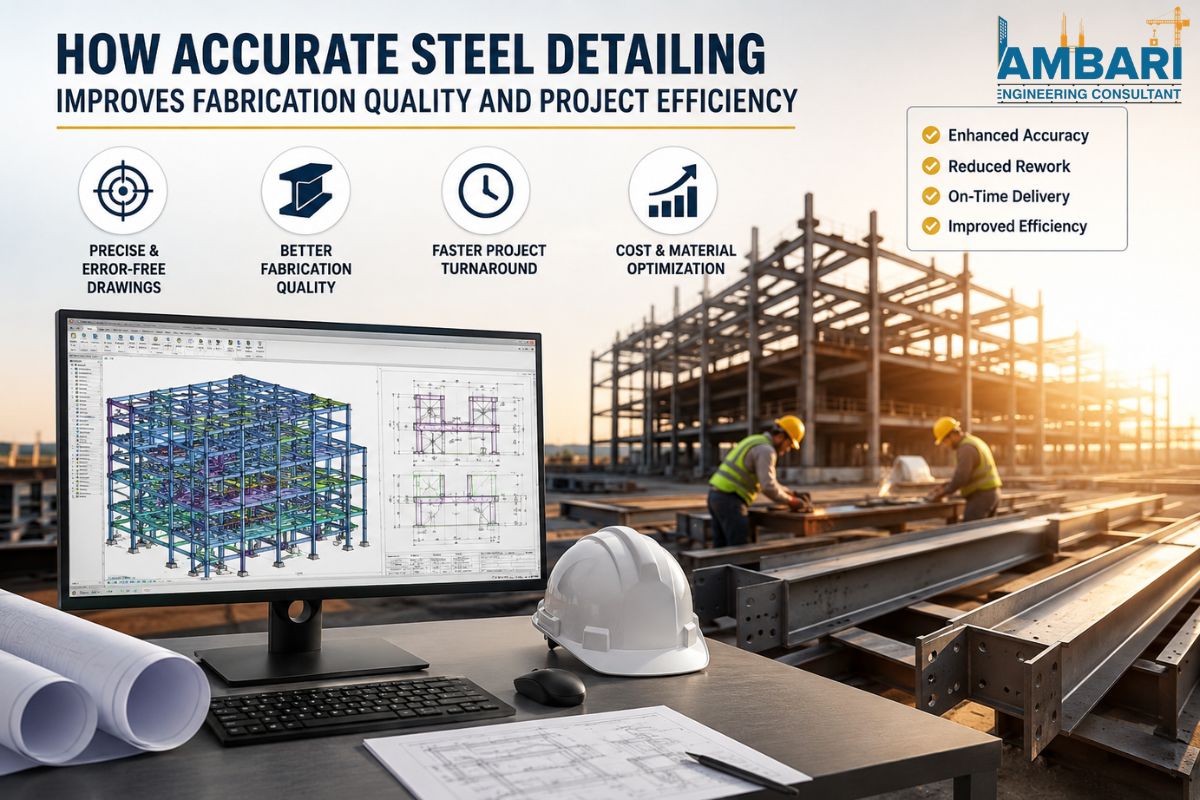
This is what turns a design into something buildable. A fabricator with accurate, complete documentation can plan cutting schedules and shop time with confidence instead of stopping mid-build to chase down a missing dimension.
A few issues come up often enough that they're worth naming directly.
Detailing firms don't all work the same way, and the gap between a good one and a mediocre one is bigger than people expect going in.
Look for a team that actually knows Australian Standards, not one applying general international codes loosely to a local job. AS 4100 and AS/NZS 1170 carry specific wind and seismic requirements that shift a lot across the country, from cyclone country in Queensland down to milder southern conditions.
Moreover, ask how they handle revisions and how changes get communicated to the fabrication team. A firm with solid revision tracking will save you more time over the life of a project than one that's slightly faster at the start but sloppy with version control later.
Ambari Consultant handles this whole process, from design coordination through to fabrication-ready documentation, for structural steel and PEB projects across Australia, India, and the UAE. The value isn't any single drawing. It's a workflow that catches problems before they reach the shop floor.
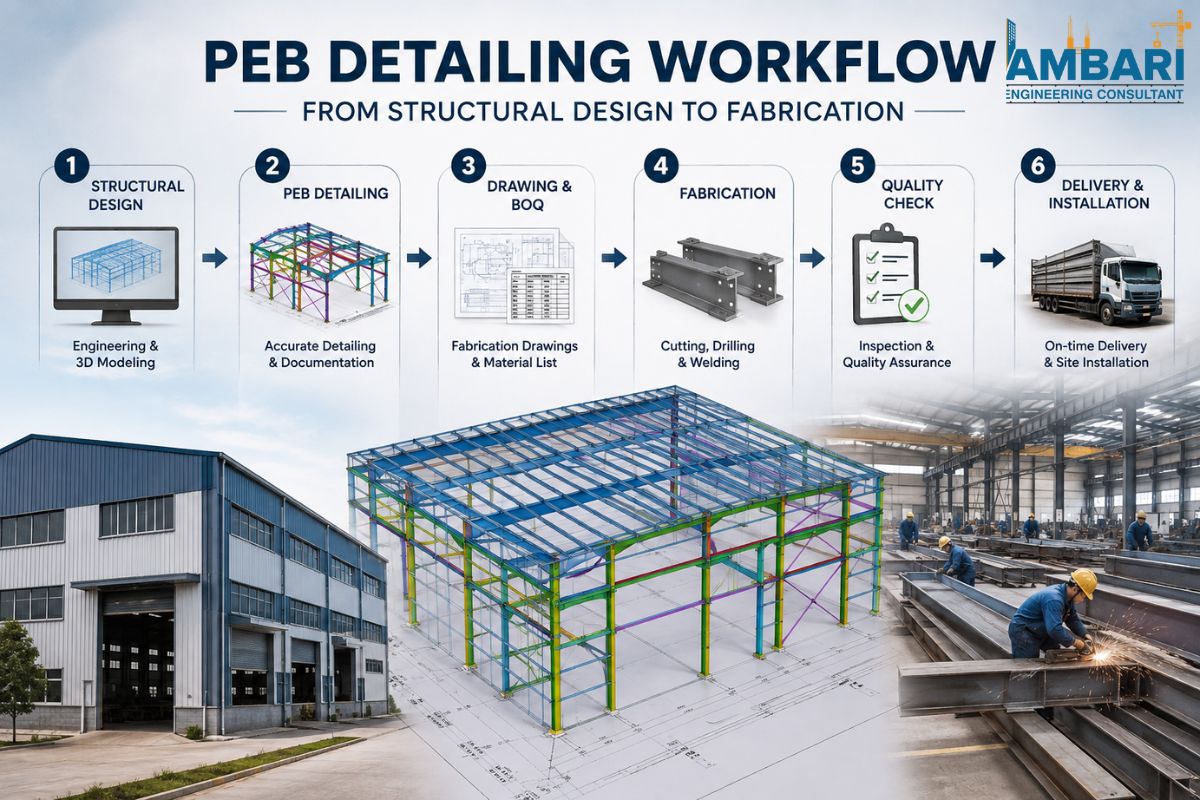
PEB detailing occupies an awkward spot on most projects. Too technical to skip, too detailed to rush, and usually ignored until something goes wrong on site. A structured process, from design coordination through connection design, shop drawings, review, and final documentation, is what keeps a build moving without expensive rework.
Fabricators who invest properly in PEB detailing services in Australia tend to see fewer site delays and cleaner builds. If you're working on a pre-engineered building and want a detailing partner who understands both the engineering and the shop floor reality, get in touch with Ambari Consultant.
It's the process of turning structural design drawings for pre-engineered buildings into shop and erection drawings that fabricators and site crews can build from directly.
It depends on size, but a mid-sized warehouse usually runs two to four weeks from design input to fabrication-ready drawings, revision cycles included.
AS 4100 covers steel structure design. AS/NZS 1170 covers loading, including wind and seismic actions that vary by region.
Get them wrong and you either slow down site erection through poor fit-up or weaken the connection's structural performance. Both are expensive to fix after fabrication.
Shop drawings show individual piece dimensions for cutting and drilling. Erection drawings show the sequence and placement for site assembly.
Some of it can, once column grids and bay spacing are locked in. Connection design generally waits until load calculations are final.
Poor revision control, most often. Outdated drawings circulating alongside current ones without clear labelling.
Yes. Connection designs that ignore a shop's real welding and cutting capabilities usually need rework before they can actually be built.
Piece mark drawings, bolt lists, material take-offs, erection drawings, and anchor bolt setting plans for the concrete contractor.
Look for real experience with Australian Standards, clear revision tracking, and a willingness to coordinate directly with your fabrication team before drawings are locked in.
Explore our latest insights, guides, and industry updates.