.png)

An unfinished building costs money every week it sits idle. No rent coming in, no equipment installed, financing charges piling up regardless of how close you are to done. That's the real reason speed matters in commercial jobs. It's not about bragging rights. It's about who's covering the carrying costs while the frame goes up.
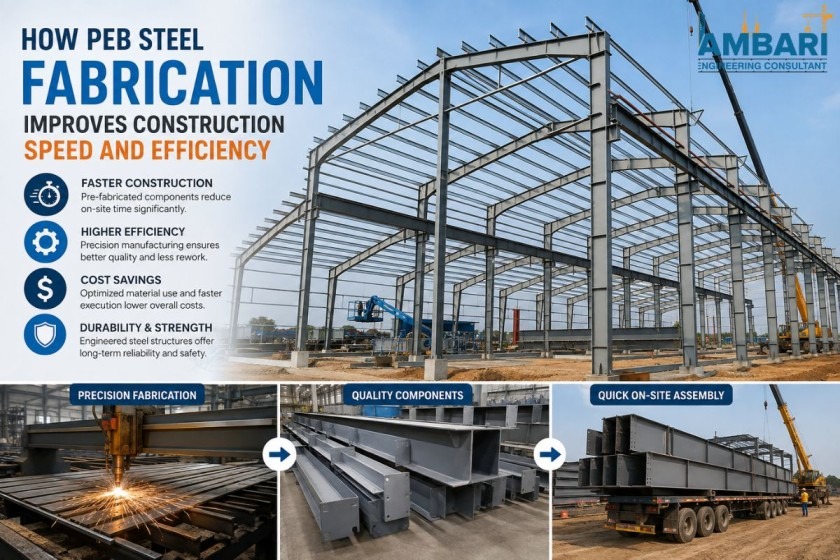
Pre-engineered buildings get around part of this by moving fabrication off the critical path entirely. Instead of shaping steel on site, where weather, crew shortages, and cramped staging areas all slow things down, the pieces get cut and prepped in a shop weeks before anyone breaks ground. Companies running PEB fabrication services in USA lean on that shop-first setup because it strips out most of the delays that plague traditional steel jobs.
I've watched warehouse projects where a stick-built steel frame and a pre-engineered one landed months apart, not days. On a project with a hard occupancy date, that gap is the whole ballgame.
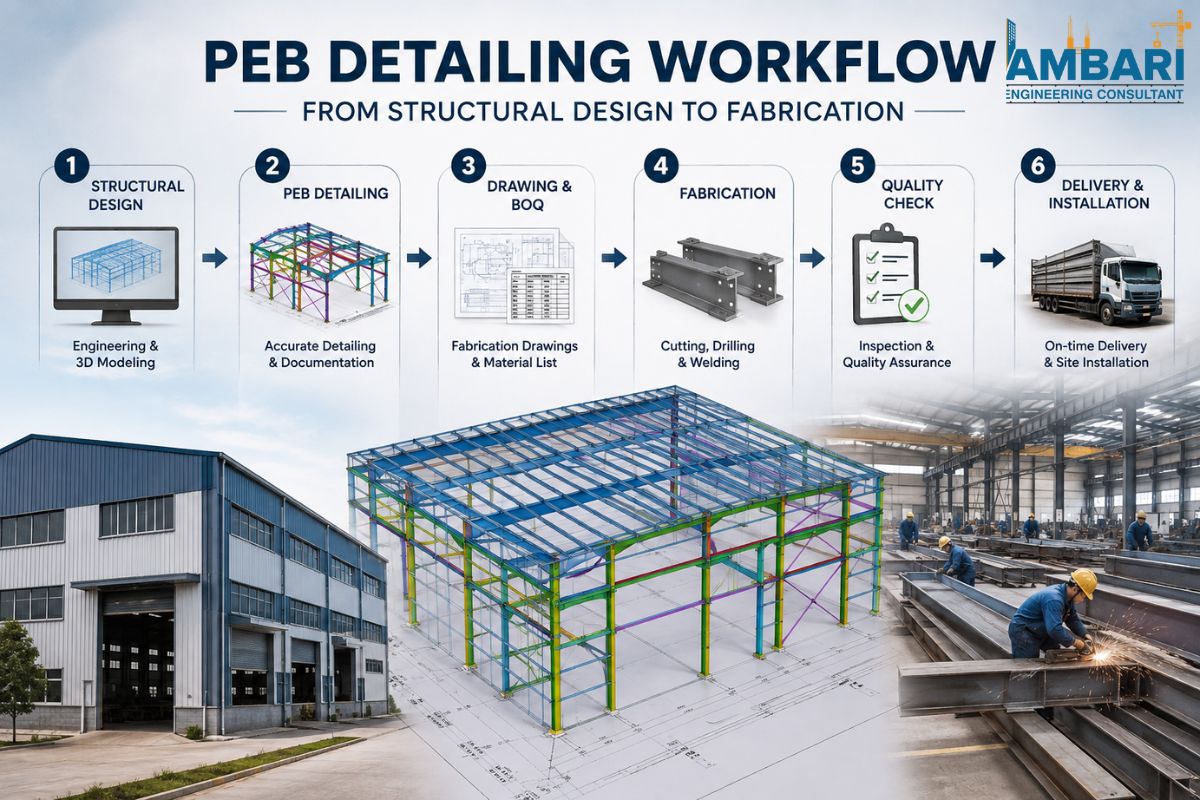
A fabrication shop does more than cut steel to length. It takes approved drawings, programs the cutting and drilling machines to those exact specs, and turns out columns, beams, and connection plates meant to bolt together on site with no rework needed.
Roughly, the sequence goes:
However, that marking step sounds like an afterthought, but it's usually what separates a smooth erection from a chaotic one. One mislabeled beam can stall a whole team for half a day while someone tracks down where it's supposed to go.
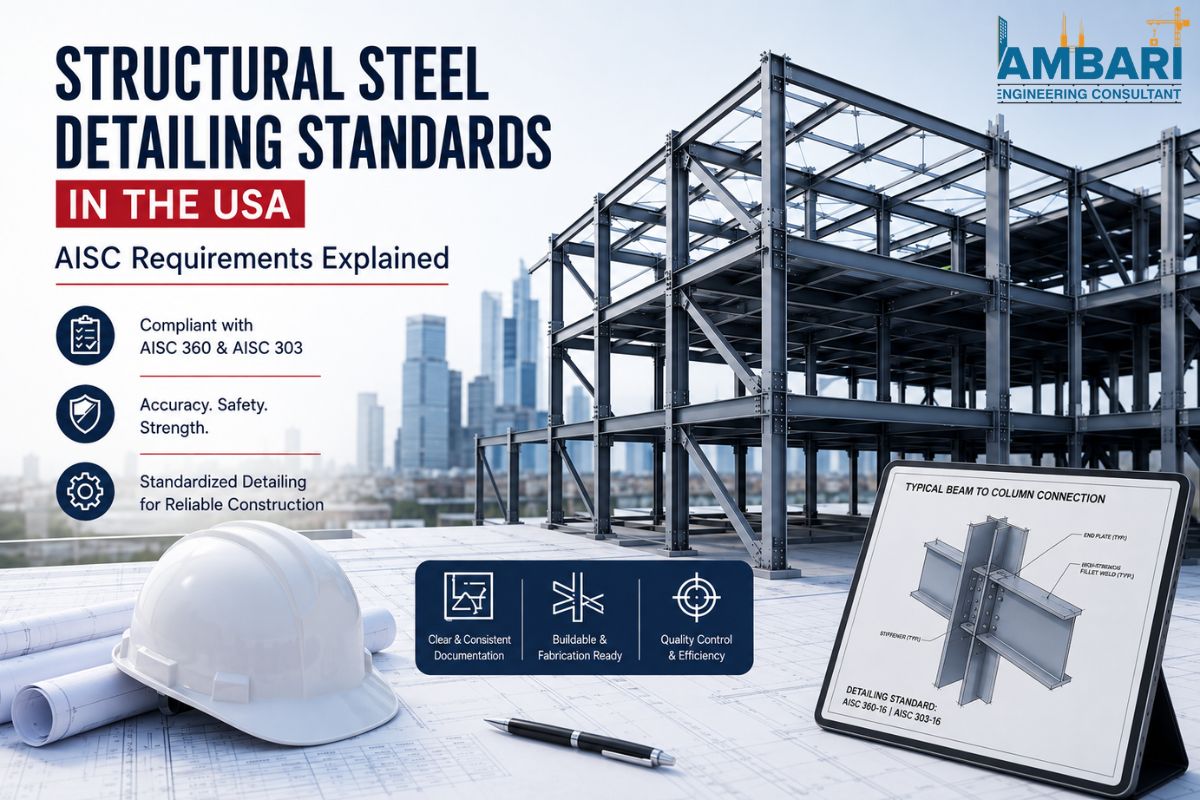
Detailing sits between structural engineering and actual fabrication. An engineer sizes the beam and decides where it goes. A detailer figures out exactly how it connects to everything around it, down to bolt patterns and plate thickness.
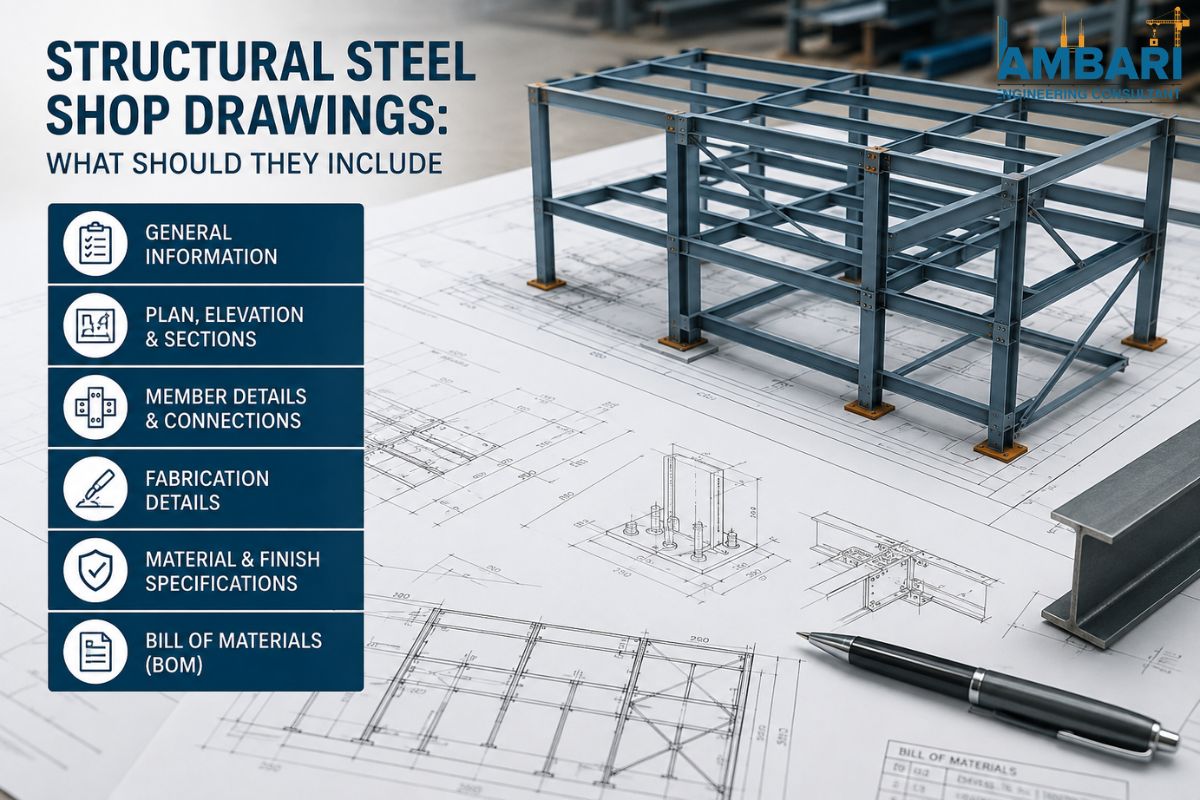
Firms handling PEB detailing services in the USA generally produce three sets of drawings: shop drawings for the fabricator, erection drawings for the field crew, and connection details showing precisely how members join. Miss something at this stage, and it doesn't stay small. It turns into a beam that won't fit, a bolt hole off by a few millimeters, or a connection that can't actually carry the load it was designed for.
Here's a real one: on a mid-size warehouse job, a detailing error placed the anchor bolts two inches off from the foundation plan. By the time anyone caught it, the columns were already cut and shipped. Fixing it meant field-drilling new holes through steel on site, which is slower, pricier, and structurally messier than a shop-drilled connection. That one mistake added nearly a week.
Good detailing catches these problems before steel gets cut. It's the cheapest place in the whole process to fix something.
Fabrication and detailing only pay off if the pieces actually go up fast and correctly. That's where PEB erection contractors USA come in: the crews receiving shipped components, sequencing the lift, and bolting or welding everything into place.
Erection speed comes down to a handful of things that have nothing to do with the steel itself:
| Factor | Why It Matters |
|---|---|
| Delivery sequencing | Pieces need to show up in installation order, not just whenever the truck happens to be ready |
| Crane access | Site layout and staging space limit how fast crews can lift and set members |
| Crew experience with PEB systems | Crews who've bolted pre-engineered connections before move noticeably faster |
| Weather windows | Erection is mostly fair-weather work, so scheduling has to account for forecasts |
A team that knows PEB systems can set a mid-size frame in days instead of weeks, but only if fabrication and detailing handed them clean, matched components. Break any one of those links and even the fastest fabrication shop won't save the schedule.
People mix up drafting and detailing constantly, but they're not the same step. Detailing works out the engineering logic behind each connection. Drafting turns that logic into the precise technical drawings fabricators and permitting offices actually use.
PEB engineered building drafting services USA typically cover floor plans, elevations, foundation layouts, and the dimensioned shop drawings that feed straight into cutting machines. Drafting accuracy matters because one dimension error travels through every step after it. Fabrication, delivery, erection- all of them inherit whatever mistake got baked into the drawing.
Moreover, worth knowing: not every jurisdiction wants the same level of drafting detail for permitting. Some counties require full structural calculations alongside the drawings. Others accept a simplified package. Skip this check early, and it's a common way projects lose weeks to permit rejections later.
A handful of patterns keep showing up on delayed PEB projects:
None of these are unusual or complicated problems. They're ordinary coordination failures, and nearly all of them are avoidable with the right sequencing.
If you're overseeing a PEB project, a few habits actually move the needle:
Therefore, none of this is complicated. It mostly comes down to sequencing decisions correctly and not assuming speed in one phase automatically carries into the next.
Speed on a pre-engineered building isn't one fast step, it's accurate detailing, precise drafting, disciplined fabrication, and an experienced erection crew all working off the same clean set of information. When those line up, PEB fabrication services in USA can shave months off a schedule compared to conventional steel construction. When they don't, even the best steel sits idle on the back of a truck.
If you're planning a project and want detailing, drafting, or fabrication coordination handled by people who've seen exactly where these projects go wrong, Ambari Consultant works through this kind of coordination daily.
It varies by project, but pre-engineered buildings often finish 30 to 50% faster since components come fabricated off-site and arrive ready to assemble, cutting down on-site labor and weather delays.
Detailing works out connection logic and load paths between members. Drafting produces the dimensioned drawings used for fabrication and permitting. Related steps, but distinct ones.
Yes, though changes should go through the original detailer or a qualified structural engineer to confirm they don't compromise the load paths or connection integrity built into the original design.
Depends on building size and shop capacity, but most mid-size PEB packages take a few weeks from approved drawings to shipment-ready steel, assuming no major revisions come up mid-process.
Foundations are usually simpler than conventional builds but still need to match the exact anchor bolt layout in the detailing package. Getting that coordination right avoids costly on-site fixes.
Poor coordination between detailing, fabrication, and erection teams causes most delays, along with foundation scheduling mismatches and permitting requirements that never got confirmed early.
Yes, with the right engineering adjustments for snow load, wind load, and seismic requirements specific to the region. Those factors get built into detailing and drafting, not tacked on afterward.
Actual experience erecting bolted pre-engineered systems, not just general steel work. Ask about past project timelines and how they've handled weather or logistics delays before.
Generally, yes, mostly because of reduced labor hours on site and shorter schedules, though material costs still depend on design complexity, span requirements, and regional steel pricing.
As early as possible, ideally before any steel gets ordered. Finalizing the building's layout and use case before drafting begins avoids expensive revisions and schedule slippage down the line.