.png)

How Steel Detailing Helps Reduce Material Waste and Fabrication Costs
Key takeaways
- It is mostly detailing errors, rather than site errors, that result in most of the rework that raises the costs of projects based on steelwork.
- Correct connection details and accurate bill-of-materials help achieve lower waste and result in less need for reordering steel.
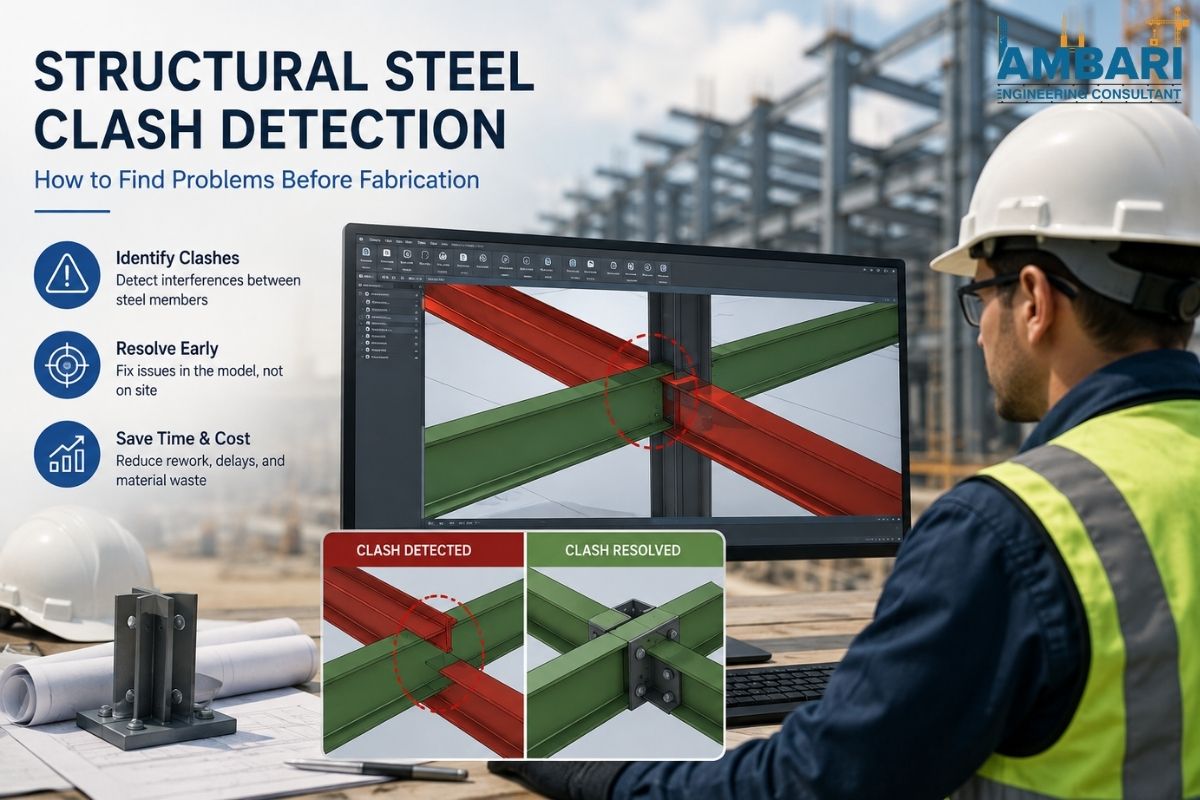
- Detection of clashes in the modeling process permits avoidance of on-site discrepancies, which can be cured with expensive field operations.
- Use of established steel detailing services in USA companies reduces the time required for steel fabrication and improves the accuracy of estimates.
Why do steel projects waste so much material?
Steel waste usually does not result from one major blunder. Instead, it is the culmination of several smaller mistakes: a beam length that has been unnecessarily rounded up, an ambiguous connection detail until the shop queries about it, and a bolt pattern that does not correspond to the actual orientation. None of these mistakes are presented as “waste” in the budget, but rather as piles of scrap steel and an order placed for the replacement plate that was not planned for.
However, the construction sector produces around 600 million tons of waste in the US per year, of which a considerable part is made of structural waste. If the fabrication shop works from incomplete drawings, it will need to make judgment calls that tend to lead to over-ordering of materials. The excess steel becomes waste as soon as the work is done and the materials become useless.
How does detailing actually cut waste?
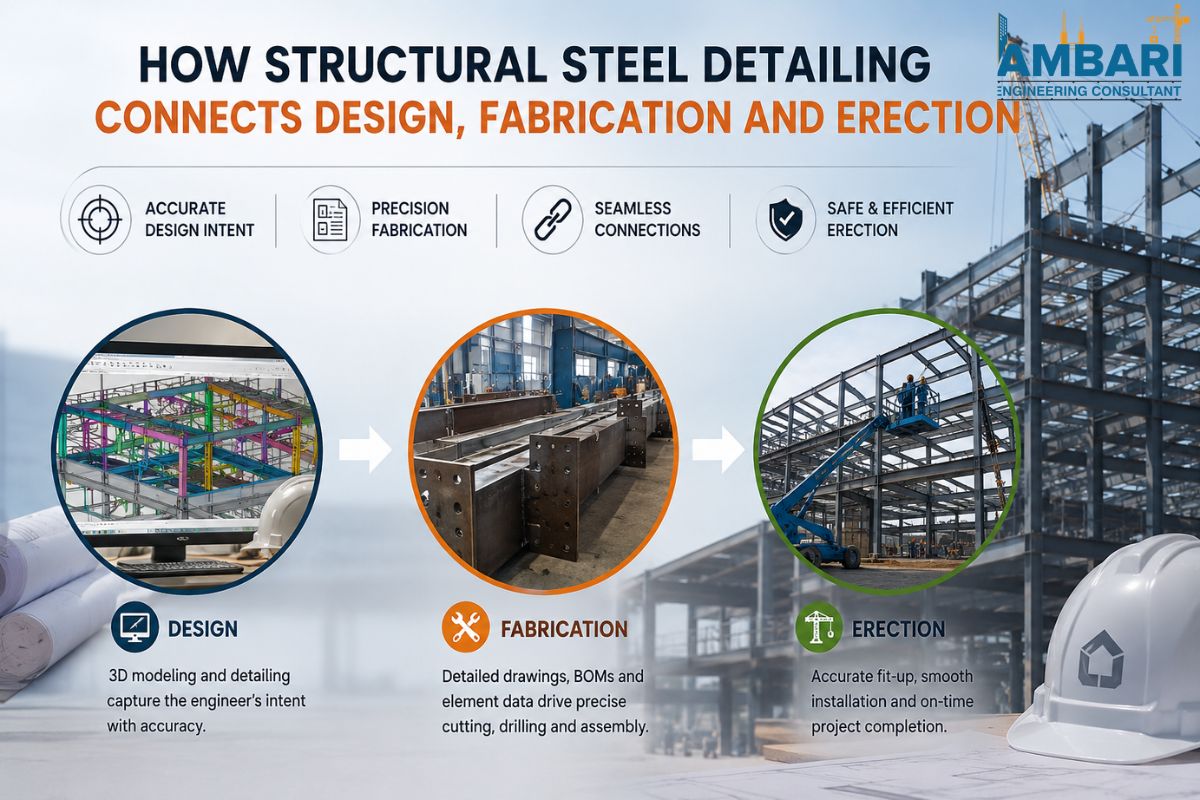
Simply put, the job of the detailer is to make sure the design has no outstanding questions before it arrives at the fabrication floor. More specifically, this means:
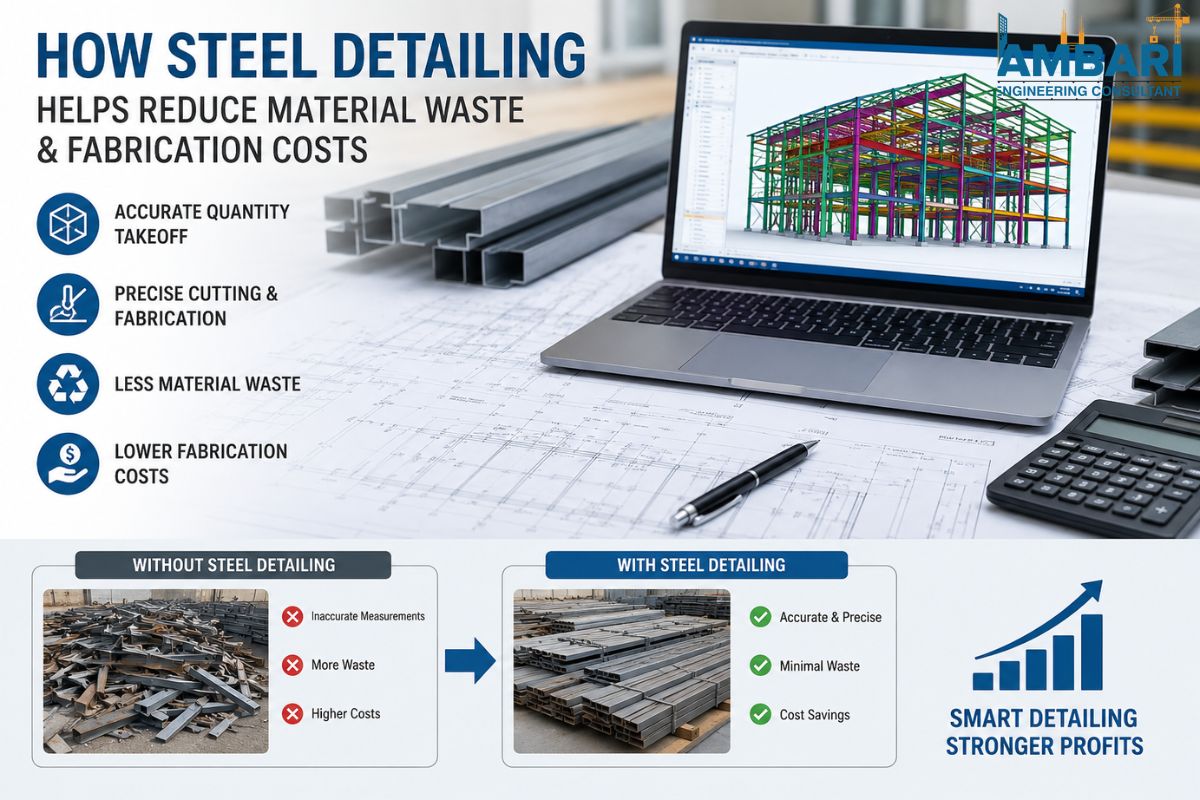
- Generating precise cut lists that allow the lengths of plates and members to be ordered for each specific piece rather than rounded
- Creating every joint in a 3D model to ensure all holes for bolt joints and welds match up before any steelwork is done
- Applying clash checks in good time to avoid a conflict at the construction site rather than addressing it in the design
The result, if done correctly, is that structural steel detailing services providers are able to move the problem-solving process upstream. A clash found during the modeling would cost the detailer only one hour of work.
Moreover, a clash discovered during erection would lead to higher costs due to needing to rent a crane for a longer period of time or the crew being idle due to waiting while the welding is being done in a hurry, most likely improperly.
Where fabrication costs get absorbed?
Fabrication shops don't price jobs purely on tonnage. They price on complexity, on how much interpretation their team has to do, and on how many revisions land on their desk mid-run. A drawing set that's been through a rigorous detailing and checking process lets a shop quote with more confidence and fabricate without pausing to call the engineer for clarification.
Reliable steel fabrication drawings services in USA reduce this friction in a few concrete ways: fewer RFIs during fabrication, fewer partial re-runs when a dimension turns out wrong, and better sequencing since the shop knows exactly what ships when. Industry data puts the average cost of processing a single RFI (Request for Information) at over $1,000 once labor and delay are factored in. A project that generates twenty avoidable RFIs because of unclear detailing isn't just slow - it's carrying a hidden five-figure cost that never appears as its own budget line.
Detailed vs. non-detailed projects: A side-by-side look
| Factor | Poorly Detailed Project | Properly Detailed Project |
|---|---|---|
| Material ordering | Rounded up "for safety," often over-ordered | Ordered to exact cut list |
| Clash discovery | Found during erection, on-site | Found during 3D model review |
| RFI volume | High, causes fabrication delays | Low, most questions resolved before cutting |
| Rework rate | Can exceed 10–15% of project cost | Typically well under 5% |
| Fabrication scheduling | Interrupted by clarification requests | Runs continuously, predictable timeline |
| Scrap steel | Higher, from miscuts and revisions | Lower, waste tracked and minimized |
Furthermore, the gap here isn't cosmetic. On a mid-size commercial job running a few million dollars, the difference between a 4% rework rate and a 12% rework rate is real money that either lands in the contractor's margin or disappears into corrections nobody planned for.
Mistakes that quietly add up
A few patterns show up again and again on projects where waste and cost overruns get out of hand:
- Skipping detailer-fabricator coordination: Some teams treat detailing as a box to check rather than a conversation. The best outcomes happen when the detailer understands how a specific shop actually cuts and assembles steel, not just what the drawing standard requires.
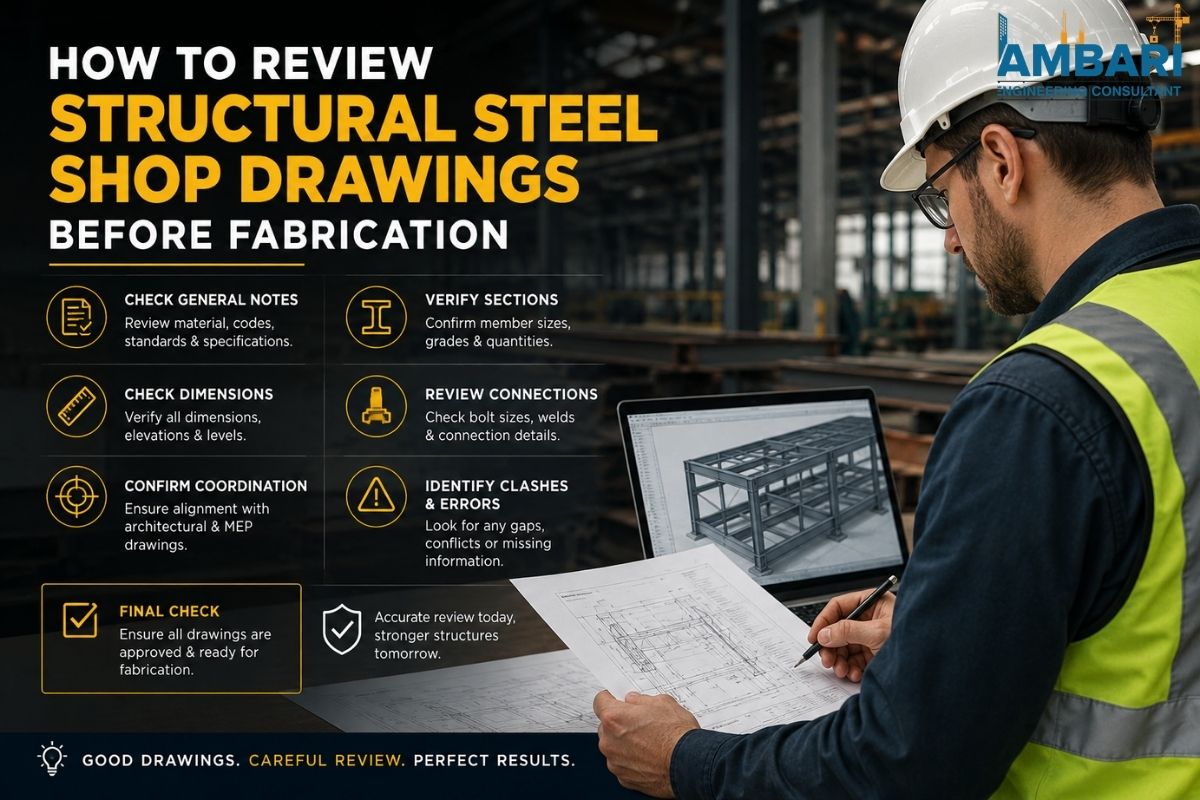
- Under-scoping the review phase: Rushing approval on shop drawings to hit a schedule milestone often backfires. An error that slips through review surfaces later, usually at a point where fixing it is far more expensive.
- Treating every project like the last one: Connection details, tolerances, and even preferred bolt patterns vary by region and by fabricator. Reputable steel detailing services in USA firms adjust their approach project by project rather than reusing a generic template.
- Ignoring feedback loops: When a shop flags a recurring issue with a detailer's drawings, that feedback should change future work. Too often it doesn't, and the same waste pattern repeats across multiple jobs.
Practical steps teams can take
If you're trying to actually move the needle on waste and cost, a few things matter more than others:
- Build in a real clash detection pass before drawings go final, not as an afterthought.
- Ask your detailing partner for a cut-list optimization review specifically aimed at minimizing drop and scrap.
- Keep a short, direct communication line between the detailer and the fabrication shop floor lead, not just the project manager.
- Track your own waste and rework numbers project to project so you can see whether changes are actually working.
None of this needs exotic tools, just time. Detailing works when it's treated as a technical discipline instead of a formality squeezed between design approval and steel delivery. Solid steel fabrication drawings services are built on that discipline, and it shows up directly in the material and labor numbers at project close.
What experienced detailers notice?
Anyone who has spent years reviewing shop drawings will tell you the same thing: the projects that go smoothly are rarely the simplest ones. They're the ones where someone slowed down at the detailing stage. A detailer who has fabricated steel themselves, or spent time on a shop floor, tends to flag issues a purely CAD-trained reviewer might miss - like a connection that's technically correct on paper but awkward to weld in the sequence the shop actually uses.
Therefore, this is also where quality shop fabrication drawing services in USA earn their reputation. Fabricators talk to each other. A detailing team that consistently delivers clean, buildable drawings gets asked back, and one that generates constant clarification calls gets dropped from the next bid list. That reputation, more than any marketing claim, is usually the most honest signal of whether a detailing service actually reduces waste in practice.
Conclusion
There's no single trick that fixes steel waste and fabrication cost. What actually moves the numbers is accurate drawings, early clash detection, tight coordination between detailer and fabricator, and a willingness to slow down at the review stage instead of rushing toward a cutting date. Projects that treat detailing as a technical safeguard rather than a paperwork step consistently come in with less scrap, fewer surprise costs, and tighter schedules.
If your team is evaluating structural steel detailing services USA for an upcoming project, it's worth asking a potential partner how they specifically approach waste reduction and clash detection, not just whether they can turn drawings around quickly. Ambari Consultant works with fabricators and contractors on exactly this kind of detailing, focused on cutting waste and keeping fabrication schedules predictable from the start.
Frequently asked questions
- What is structural steel detailing?
It's the process of turning engineering design drawings into precise shop and erection drawings that tell fabricators exactly what to cut, weld, and assemble, down to bolt patterns and connection details.
- How much can detailing actually reduce material waste?
It varies by project, but industry rework data suggests well-detailed projects can keep rework and associated waste well under 5% of cost, versus double digits on poorly coordinated jobs.
- Why do fabrication costs rise without proper detailing?
Unclear drawings force shops to pause for clarification, re-cut miscut pieces, and sometimes over-order material as a buffer, all of which add labor hours and material cost.
- What's the difference between detailing and structural engineering?
Engineers design the structure and set performance requirements. Detailers translate that design into buildable, dimensioned drawings the fabrication shop can actually work from.
- Do small projects need professional detailing services?
Even modest steel structures benefit, since a single unclear connection detail can trigger a delay or reorder disproportionate to the project's size.
- What should I look for in steel fabrication drawings services in USA?
Look for a track record of low RFI counts, strong clash detection practices, and direct experience coordinating with fabrication shops rather than just producing standalone drawings.
- How does clash detection help reduce costs?
It identifies conflicts between structural, mechanical, and architectural elements on a model before steel is cut, avoiding expensive field fixes during erection.
- Can better detailing shorten project timelines?
Fewer RFIs and less rework mean fabrication runs continuously instead of stopping for clarifications, which keeps the overall schedule on track.
- What role do shop fabrication drawing services in USA play in quality control?
They provide the exact specifications fabricators need to produce consistent, code-compliant components, reducing the chance of errors reaching the erection stage.
- Is outsourcing steel detailing cost-effective for contractors?
Often yes, since specialized detailing teams bring focused expertise and established fabricator relationships that reduce costly errors more reliably than ad hoc in-house detailing.