.png)

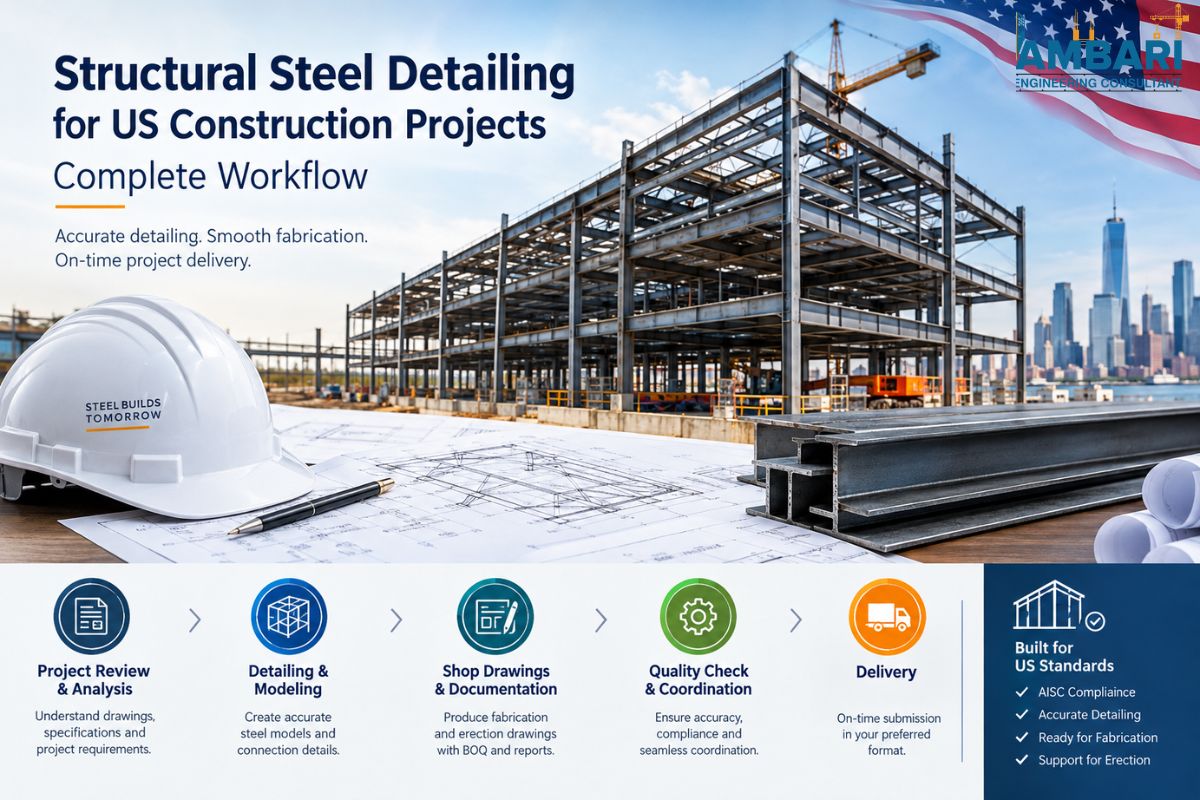
This step is crucial in connecting the design process and the production process. The engineer determines the loads, the shapes of materials to be used, and the basic connection types. Then, the detailer produces the precise geometry of the structure.
Most projects in the USA are done according to the AISC Code of Standard Practice, which provides guidelines on the drawing and its preparation. The detail package typically contains:
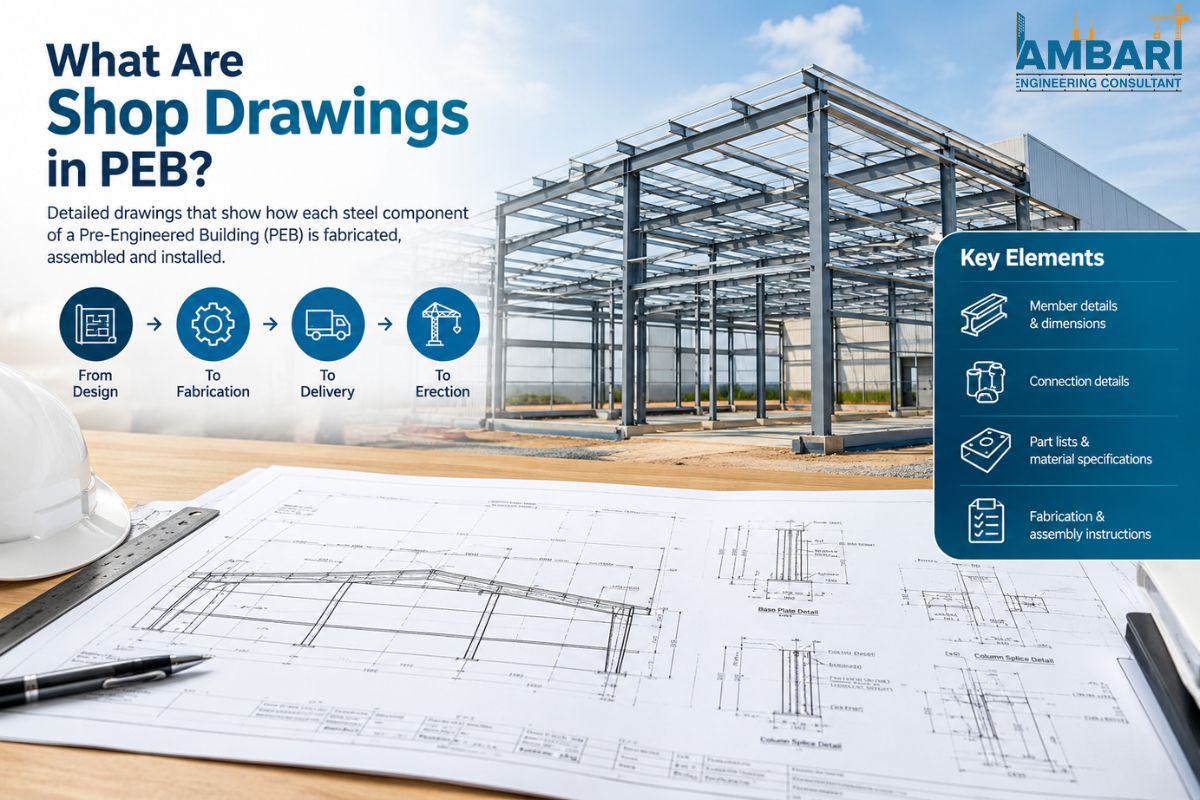
Shop drawings provide the complete directions for the workers who will do the fabrication, showing just how each piece will be cut, drilled, coped, and welded. Erection drawings provide the field crew with the means to make their assembly, indicating the order in which pieces must be assembled, where each piece goes, and how the structure remains stable in the assembly process. There must be consistency between both drawing types and the design drawn by the engineer. If they do not match, usually the field team is the first one to know about it.
Normally, a project goes through a series of steps that occur in a predetermined order. Each step is dependent on the preceding one, so a mistake made at the initial stage would usually become apparent later, at the most costly stage.
One of the most common causes of issues down the line is skipping step two. A detailer who begins detailing without checking with the fabricator about preferences may produce drawings that, while technically accurate, are not practical for fabrication. Steel detailing services in USA can be helpful.
Connections represent a point where design meets reality. A beam can be perfectly sized, but the project can still be problematic if it is impossible to use a wrench to tighten the bolts or if welding is physically impossible. Connection detailing converts the load requirements of the engineer into plates, angles, bolts, and welds that can be fabricated and installed.
The experienced detailers notice the following:
High-quality steel connection detailing services in USA not only fulfills the design requirement but also allows equipment construction to be more straightforward and faster.
Steel fabrication drawings services in USA form part of the shop drawing set. They give guidance to the fabricator so that he can create every piece correctly. The table given below highlights the differences between the major deliverables.
| Deliverable | Main Purpose | Primary User |
|---|---|---|
| Shop drawings | Detail each member and connection | Fabricator and engineer |
| Fabrication drawings | Give cutting, drilling, and welding instructions | Fabrication shop |
| Erection drawings | Show assembly order and bracing | Erection crew |
| Bills of materials | List sizes, lengths, weights, and quantities | Purchasing and shop |
Fabrication drawings are easier to read and save shop time. If the dimensions are consistent and the piece marks are logical, the questions will be few and the parts remade will be few.
While price is a consideration, don't let it be the first. A low quotation may result in multiple revisions and questions during the field trip, which can increase the overall expense.
Rather, consider the factors that indicate a successful project:
Ambari Consultant supports project teams requiring correct, constructible steel detailing in US projects. The emphasis is on drawings that can be understood by the fabricators and followed by erectors without surprises. When comparing providers, ask them for a recent example of a connection conflict they've seen and how they are able to resolve it. The answer will provide you insight into how they work.
There are many problems that can be avoided in detailing that can be predicted. Keep an eye out for these typical problems:
Moreover, teams that take time to review and communicate generally do not experience these issues. Many weeks of correction can be avoided with a brief coordinating meeting at the beginning.
One of the best investments a steel project can make is to have the proper details. Fabrication is kept on track and the erection process on schedule with clear drawings, well-designed connections, and an honest review process.
For teams that are considering a project with the help of structural steel detailing services USA, Ambari Consultant will be able to review what your scope would entail and help you put together a workflow that will fit your timeline. Talk about your drawings, the required connectivity, or what you're working on next.
Structural steel detailing is the process of converting engineering design to fabrication and erection drawings. It explains how members and plates and connections are constructed and joined together.
Shop drawings instruct the fabricator on how to create each piece. Erection drawings provide information to the field crew on the sequence and order of erection.
Connections impact fabrication, shipment, and erection. Any connection that is not field connectable might slow down the project.
It is normally done by specialist detailing companies or by fabricators that have their own team of detailers. Final drawings are approved by the structural engineer of record.
Timelines are based on project size, complexity, and review cycles. Smaller projects may take a few weeks, large and complex – several months.
There is specific 3D modelling and drafting software that detailers utilize. Experience, the check process, and the ability of the team to produce accurate, buildable drawings are more important than the right tool.
Yes. A competent detailer can track design modifications, identify conflicts and assist with the RFI process to reduce delays and allow the design to progress through the project without production slowdowns.
Ensure that scope and fabrication preferences are confirmed early, have full design documents, and keep decisions moving. Late changes and ambiguous requirements are the biggest cause of most cost overruns, rather than detailing.