.png)

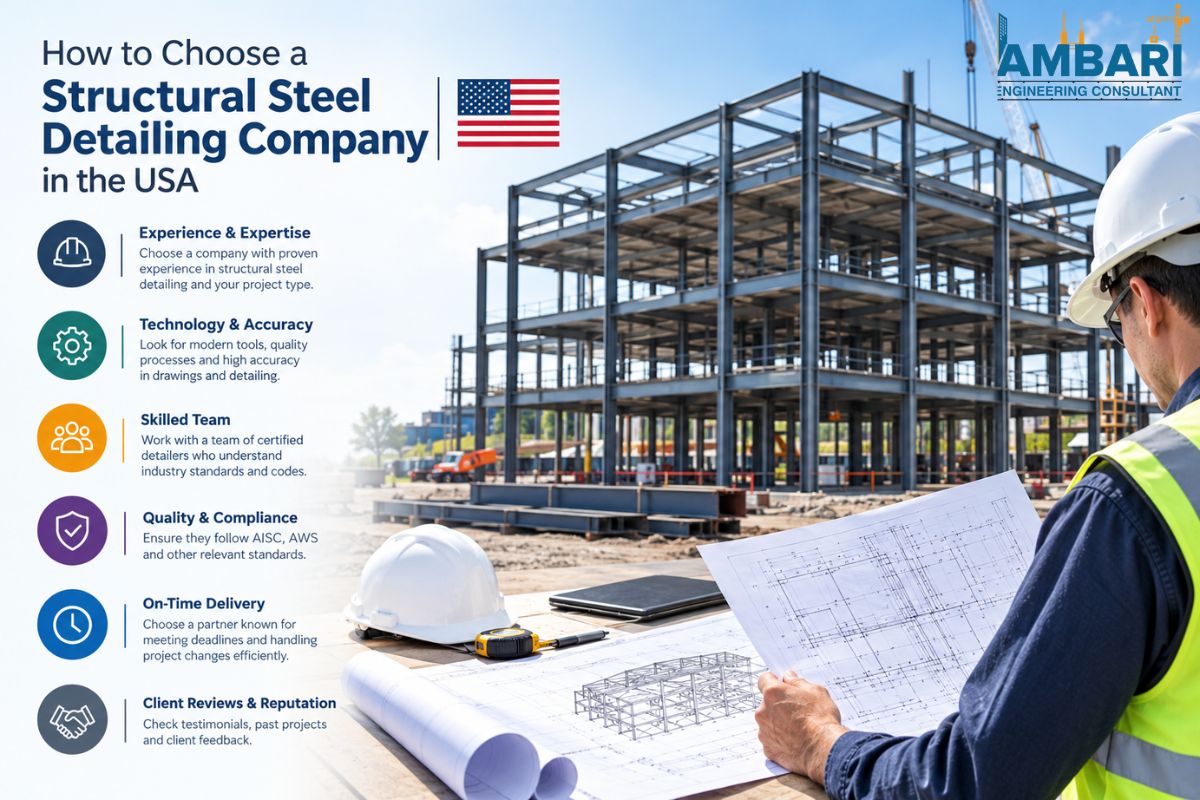
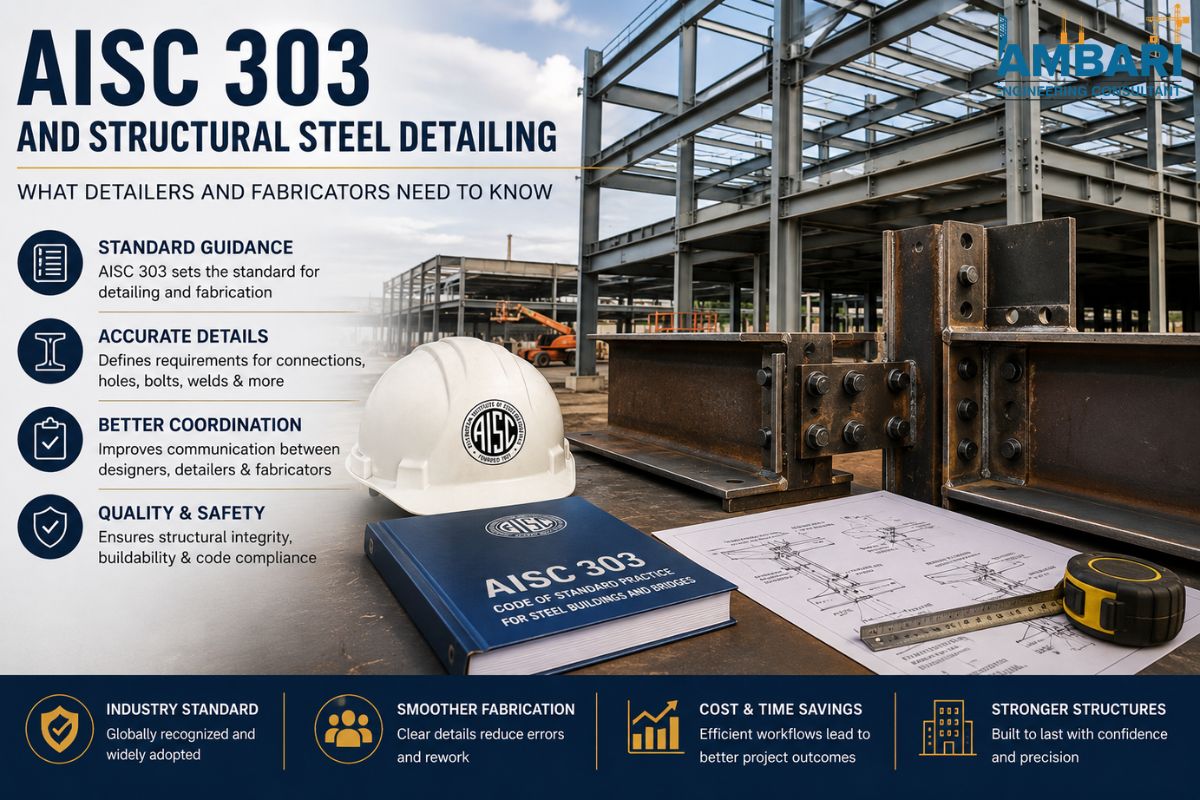
When it comes to choosing a company to provide structural steel detailing services for USA projects, there are four factors you should consider: expertise in using 3D detailing procedures, having a portfolio of work in the type of construction project you have, having a specific revision turnaround policy, and designing connections based on engineering calculations instead of guesses. Construction mistakes alone are responsible for around 7% - 10% of total construction costs for steel jobs, as a result of design inconsistencies and misunderstandings between specialists.
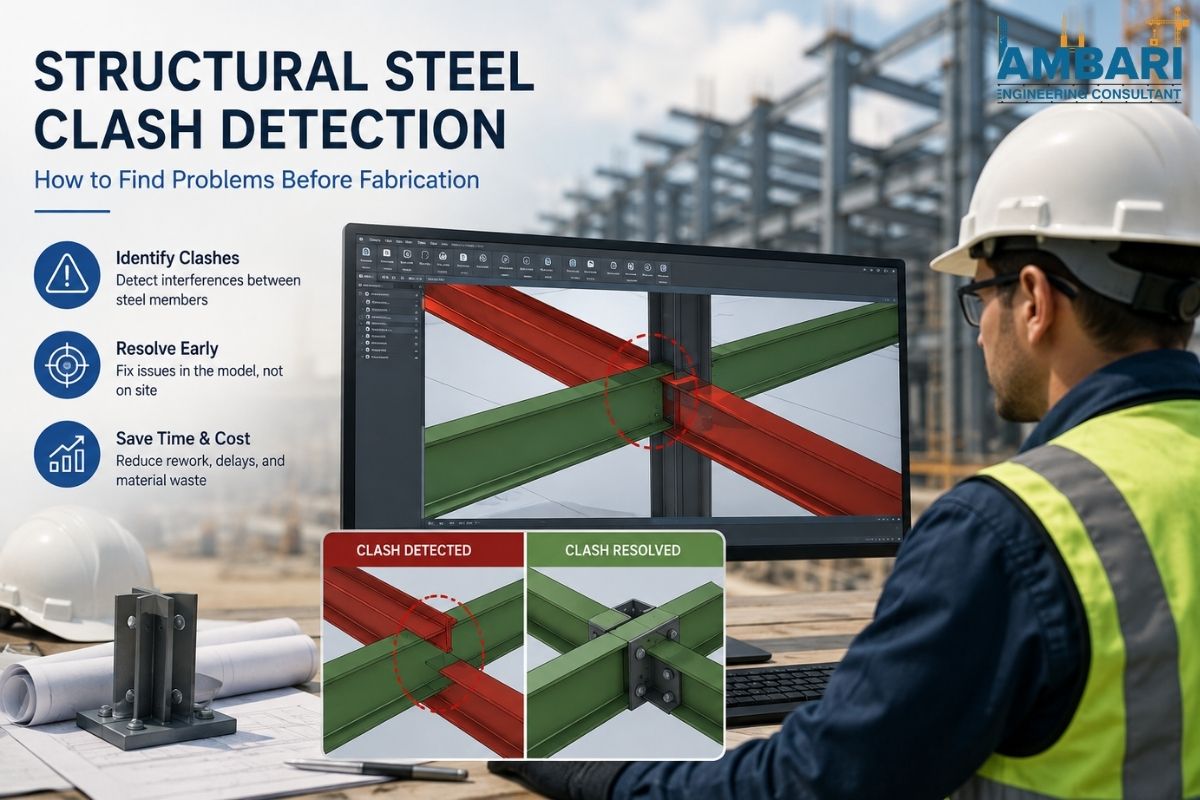
However, a detailer who can identify clashes before creating shop drawings helps save that money before it is spent. It is also recommended to ask for three references from projects of similar scale to yours, verify their RFI response time, and make sure they stand behind their drawings.
Key takeaways
- Badly managed details can increase project fabrication costs by 7–10%.
- Steel Connection Detailing Services in the USA demand an above-average level of engineering skill.
- In many instances, model coordination and alterations often play a bigger role than software.
- The demand for American construction steel keeps growing, which increases detailing needs.
What does steel detailing actually cover?
Steel detailing exists in the space between the realms of structural engineering and the fabrication shop. The structural engineer is responsible for determining the appropriate girth of beams and their position. Steel detailers transform this information into documents that include shop drawings, erection drawings, material take-offs, and bolt lists; documents which fabricators can then use to actually cut, drill, and weld steel.
Good service providers of steel detailing in USA projects don’t just trace the drawings of engineers but identify problems that engineers might not foresee: the clash of the beam with ductwork, fitting of connections in narrow columns, and a bolt configuration that prevents using a torque wrench. The point of hiring a real expert rather than a person who uses templates is the possibility of detecting potential problems in advance.
Why does the right detailing partner matter?
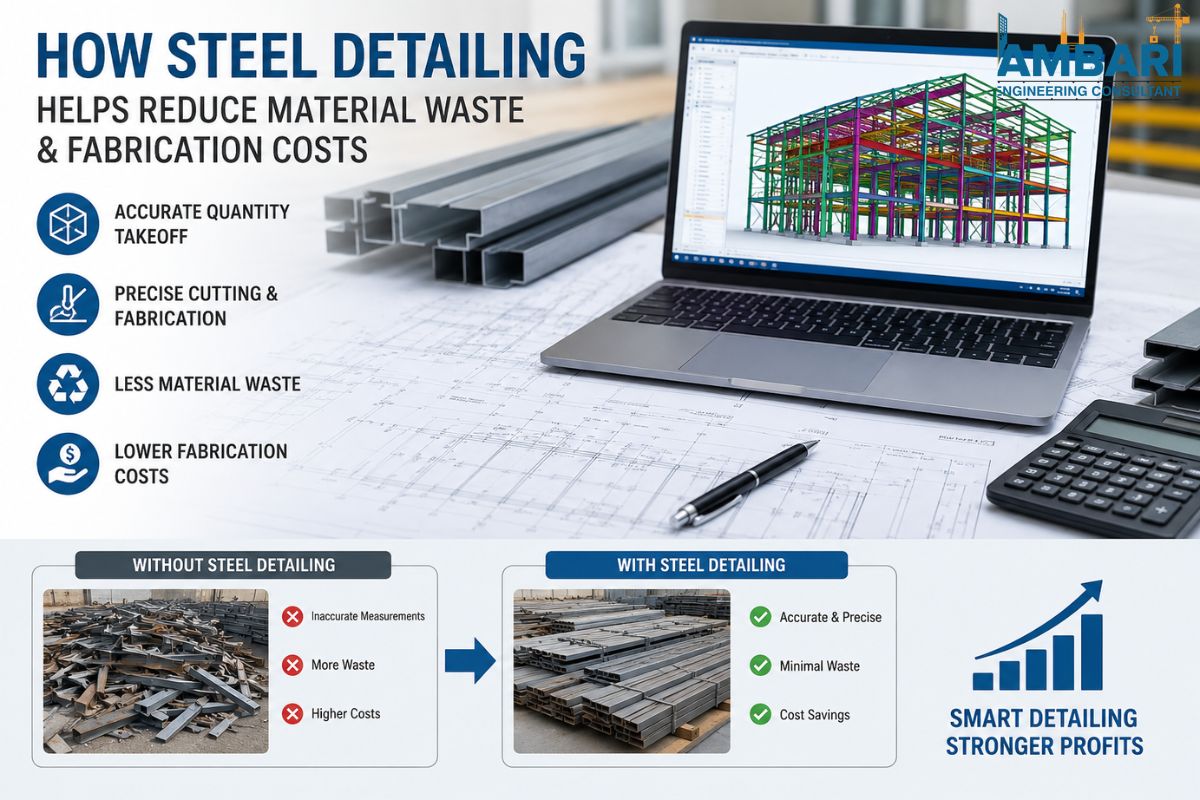
The statistic that all project managers should take very seriously is that inaccuracies in construction prompted by errors in design and ineffective inter-discipline communication may constitute 7 to 10% of the total project cost. In the case of a steel package estimated to amount to $2 million, it would be logical to assume that a considerable sum of money reaching up to $200,000 would be lost due to the wasting of materials and rework caused by the mistakes that could be avoided with the help of a planned, coordinated 3D model.
According to some studies of BIM-based detailing processes, mistakes can be eliminated in greater numbers, and up to a 30% reduction in fabrication mistakes and approximately a 10% decline in construction expenditures can be observed when new 3D coordination methods are applied instead of the old 2D drawings.
What to check before you hire?
Don't start with price. Start with these:
| What to Check | Why It Matters |
|---|---|
| Portfolio in your building type | A detailer who's done ten warehouses may struggle with a hospital's connection complexity |
| Turnaround on RFIs and revisions | Slow answers stall fabrication, and fabrication delays cascade into erection delays |
| Connection design licensure | Some jobs need a PE stamp on connection calculations, so confirm they can provide one |
| References from GCs, not just fabricators | Contractors will tell you how the detailer handled field issues, which fabricators sometimes soften |
| Model coordination process | Ask specifically how they resolve clashes with MEP and architectural models |
A company offering structural steel detailing services USA clients reliant on should be able to answer every one of these without hesitation. If you get vague answers about "using the latest technology" instead of specifics about process, that's worth noting.
Steel connection detailing: where most projects go wrong
Connections are the part of steel detailing that separates a competent shop from a mediocre one. Anyone can draw a beam. Sizing the bolts, welds, and plates that hold that beam to a column under actual load, while accounting for shear, moment, and sometimes seismic requirements, takes real structural knowledge.
Steel Connection Detailing Services in USA vary a lot here. Some detailers default to standard connection tables without checking whether the actual load case fits. That works fine until it doesn't, usually on a connection carrying more load than the standard table assumed, at which point an inspector flags it, and the whole sequence stops for a redesign.
Moreover, a detailer who understands connection design will flag unusual load paths early, before the drawing reaches a shop. On any job with moment frames, braced frames, or unusual geometry, that catch is what keeps a fabrication run moving instead of stalling it.
In-house vs. outsourced steel fabrication drawings
Fabrication shops sometimes keep detailing in-house, and sometimes outsource it. Neither is automatically better. It depends on capacity and specialization.
In-house detailing works well when:
- The shop has steady, similar work (same building types, repeat clients)
- Turnaround speed matters more than specialized connection expertise
- The shop's detailers already know the fabricator's shop standards inside out
Outsourcing steel fabrication drawings services in USA makes more sense when:
- Project volume spikes beyond what an in-house team can handle
- The job involves unusual geometry, seismic zones, or connection types the in-house team hasn't handled before
- A second set of eyes on connection design is worth the cost of an external review
Furthermore, plenty of fabricators run a hybrid model, keeping routine work in-house and sending out anything specialized or anything that hits at a busy time. That flexibility is one reason demand for outside detailing partners keeps climbing even as fabrication technology improves.
Red flags to watch for
- No willingness to show sample drawings from a comparable project
- Can't explain their clash-detection process beyond "we check for issues"
- Pricing dramatically below market average with no explanation
- No PE involved when the job clearly requires stamped connection calculations
- Poor communication during the bidding phase. That tends to get worse, not better, once you're under contract
Therefore, if a detailing partner shows two or more of these, keep looking. Switching mid-project costs a lot more than a slower vetting process upfront.
What does Ambari Consultant do differently?
Ambari Consultant works from coordinated 3D models rather than isolated 2D drawings, so clashes between steel members, connections, and adjacent trades get caught during the modeling phase instead of after fabrication has already started. The team handles both standard shop and erection drawings, along with the connection design work that a lot of detailing shops treat as an afterthought.
For contractors managing multiple trades on a schedule, that upfront coordination is what keeps a steel package from becoming the thing that holds up everyone else.
Common mistakes contractors make
- Choosing based on price alone: The cheapest bid on detailing usually means less time spent checking for clashes, and that cost resurfaces later as rework.
- Skipping reference checks: A portfolio looks good on paper. A phone call to a past GC tells you how the detailer actually handled a field problem.
- Assuming all detailers handle connections the same way: They don't. Ask directly how they approach non-standard connections before assuming competence.
- Not clarifying revision policy upfront: Find out how many revision rounds are included before signing, not after the third round of changes.
Conclusion
Picking the right detailing partner comes down to whether the team treats connection design as engineering rather than guesswork, and whether they catch problems in the model before those problems show up on-site. Fabrication errors can consume 7-10% of a project's total cost, so the selection process is worth the extra week it takes to do properly. If you're evaluating structural steel detailing services in USA for an upcoming project, ask the questions above before you ask about price.
Frequently asked questions
- What's the difference between shop drawings and erection drawings?
Shop drawings tell the fabricator how to cut and assemble individual steel pieces. Erection drawings tell the field crew where each piece goes and how it connects on-site. - How long does structural steel detailing typically take?
It depends on project size and complexity, but a mid-size commercial project usually takes several weeks from model kickoff to final approved drawings. - Do I need a PE stamp on connection drawings?
Often yes, especially for connections carrying significant load or in seismic zones. Confirm this with your local building department before finalizing scope. - Can a detailing company work with drawings from any structural engineer?
Yes, competent detailers regularly work from engineering drawings produced by firms they've never worked with before, and turn them into fabrication-ready output. - What causes most delays in steel detailing projects?
Slow RFI turnaround and unresolved clashes between steel and other building systems are the two most common causes of schedule slip. - Is 3D modeling always better than 2D detailing?
For anything beyond simple structures, yes. 3D coordination catches clashes that 2D drawings simply can't reveal until fabrication or field installation. - How much does outsourcing steel fabrication drawings typically cost?
Costs vary by project complexity and region, but it's usually calculated as a percentage of total steel tonnage or a fixed fee per drawing sheet. - What should I look for in a detailer's portfolio?
Look for projects matching your building type and connection complexity, not just volume of past work. - Can detailing errors really affect my project budget significantly?
Yes. Industry data shows fabrication errors tied to design discrepancies can account for 7-10% of total project costs on steel jobs. - How do I start a project with Ambari Consultant?
Reach out with your structural drawings and project scope. The team will walk through the timeline, connection requirements, and detailing approach before quoting.